
Combine HMA and Supertrend Indicators for Precise Entry Signals


In the fast-paced world of trading, precision is everything. One of the most effective ways to enhance trading accuracy is by combining complementary technical indicators. Two powerful tools in this regard are the Hull Moving Average (HMA) and the Supertrend indicator. By merging their strengths, traders can identify high-probability entry signals while minimizing false signals. In this article, we’ll explore how to combine HMA and Supertrend for precise trading entries.
Introduction to Trading Indicators
What are Technical Indicators?
Technical indicators are mathematical calculations based on historical price, volume, or open interest data. They help traders make informed decisions by highlighting trends, momentum, volatility, and potential reversals. Popular categories include moving averages, oscillators, and trend-following indicators.
Why Use Multiple Indicators Together?
Using multiple indicators provides confirmation and reduces the chances of acting on misleading signals. While one indicator might suggest a trend, another can validate it or warn of potential reversals. This layered approach helps traders execute more precise entries and exits.
Understanding the Hull Moving Average (HMA)
Overview of HMA
The Hull Moving Average is a smooth and responsive moving average designed to reduce lag. Developed by Allan Hull, it reacts quickly to price changes while maintaining smoothness, unlike traditional moving averages which can be slow or choppy.
Calculation of HMA
HMA is calculated using weighted moving averages (WMA) in a specific formula:HMA=WMA(2⋅WMA(n/2)−WMA(n)),n)
Where n is the period length. This formula allows HMA to respond faster to price changes while maintaining a smooth curve.
Advantages of HMA over Traditional Moving Averages
- Reduces lag significantly compared to SMA and EMA
- Smooths out price noise for clearer trends
- Provides early signals without excessive false triggers
Understanding the Supertrend Indicator
Overview of Supertrend
The Supertrend indicator is a trend-following tool that appears directly on price charts. It helps traders determine the market trend and potential reversals. The indicator shifts above or below price depending on trend direction.
Calculation of Supertrend
Supertrend is based on Average True Range (ATR) and a multiplier:Supertrend=(High+Low)/2±Multiplier⋅ATR

- When price closes above Supertrend, it indicates an uptrend.
- When price closes below Supertrend, it signals a downtrend.
Benefits of Using Supertrend for Trend Confirmation
- Clear visual trend indicator
- Easy to combine with other tools like HMA
- Adaptable to different markets and timeframes
Why Combine HMA and Supertrend?
Complementary Strengths of HMA and Supertrend
HMA provides smooth and early trend detection, while Supertrend confirms the trend and helps avoid false breakouts. Together, they form a system where HMA identifies potential entries, and Supertrend validates them.
Reducing False Signals
By requiring both indicators to align (HMA slope + Supertrend direction), traders can filter out market noise and avoid premature entries, significantly increasing the probability of successful trades.
Setting Up HMA and Supertrend for Trading
Recommended Timeframes
- HMA: Best used on 15-min to daily charts
- Supertrend: Works across all timeframes; ideal for 1-hour to daily charts
Choosing HMA Periods and Supertrend Multipliers
- HMA: 21, 55, or 89 periods (depending on trading style)
- Supertrend: Multiplier 3 with ATR 10–14 is commonly used
Chart Setup and Visualization
Overlay HMA on the price chart with Supertrend below/above price. Use color coding for Supertrend signals (e.g., green for uptrend, red for downtrend) to visualize entries clearly.
Entry Signals Using HMA and Supertrend
Buy Signal Criteria
- HMA slope turns upward
- Price closes above Supertrend
- Confirm support/resistance levels
Sell Signal Criteria
- HMA slope turns downward
- Price closes below Supertrend
- Confirm resistance/support levels
Examples of Trades Using Combined Signals
- When HMA (21) slope is positive and price closes above Supertrend, enter a long position.
- When HMA (55) slope turns negative and price drops below Supertrend, enter a short position.
This combination filters out false breakouts and ensures trend alignment before taking trades.
Risk Management Strategies
Stop Loss Placement with Supertrend
Place stop loss just below Supertrend for long trades or above for short trades. This ensures a logical exit if the trend reverses.
Position Sizing with HMA Trends
Adjust position size according to trend strength indicated by HMA slope. Strong slopes allow higher exposure, while flat slopes require smaller positions.
Avoiding Choppy Market Signals
Avoid trading during sideways or low-volatility periods. Both HMA and Supertrend perform best in trending markets.
Optimizing Strategy for Different Markets
Forex Trading
- Use 15-min to 1-hour charts for intraday trades
- HMA + Supertrend helps capture quick trend moves
Stock Markets
- Best on daily or 4-hour charts
- Avoid low-volume stocks to reduce false signals
Crypto Trading
- Works well on 1-hour and 4-hour charts
- Crypto volatility may require slightly higher Supertrend multipliers
Backtesting the HMA + Supertrend Strategy
Tools for Backtesting
Use platforms like TradingView, MetaTrader 4/5, or Python scripts to test historical data.
Key Metrics to Track
- Win rate
- Risk-reward ratio
- Drawdowns
- Average trade duration
Common Mistakes and How to Avoid Them
Ignoring Market Context
Even with aligned signals, check news, earnings, or economic events that can disrupt trends.
Over-optimization of Parameters
Avoid tweaking HMA and Supertrend too aggressively; it may reduce real-market applicability.
FAQs
1. What is the best timeframe for HMA and Supertrend?
Daily and 1-hour charts work well, but it depends on your trading style.

Powerful Forex VPS for MT4 & MT5 – Best Price
In stock
$44.99 $359.99Price range: $44.99 through $359.99| Validity | Monthly, Quarterly, Semi Annually, Annually |
|---|
2. Can this strategy be used for scalping?
Yes, using lower timeframes like 5–15 minutes, but risk management is critical.
3. How to reduce false signals?
Only take trades when HMA slope and Supertrend direction align.
4. Does it work in volatile markets?
Yes, but consider adjusting Supertrend multiplier to avoid premature exits.
5. Can I automate this strategy?
Yes, both HMA and Supertrend can be coded into trading bots on MT4/5 or TradingView.
6. What is the ideal HMA period for beginners?
21 or 55 periods provide a good balance between sensitivity and reliability.
Conclusion
Combining HMA and Supertrend indicators offers a robust strategy for precise entry signals. HMA provides smooth, early trend detection, while Supertrend confirms market direction. Together, they reduce false signals, enhance trade accuracy, and provide a clear roadmap for risk management. Whether trading stocks, forex, or crypto, this combination empowers traders to make smarter, more confident decisions.
Most Popular Forex EA

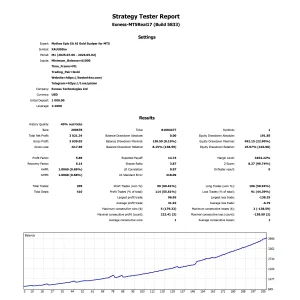
Onix Stratos XAUUSD EA: AI Smart Scalper for MT5
In stock
$0.00 $999.99Price range: $0.00 through $999.99
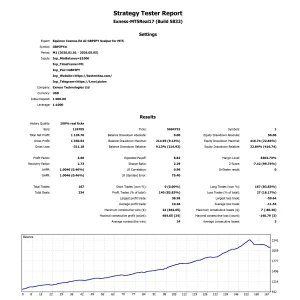
Elysium Vortex EURCAD EA: AI EURCAD Scalper for MT5
In stock
$0.00 $199.99Price range: $0.00 through $199.99
Equinox Cosmos GBPJPY EA: AI GBPJPY Scalper for MT5
In stock
$0.00 $399.99Price range: $0.00 through $399.99
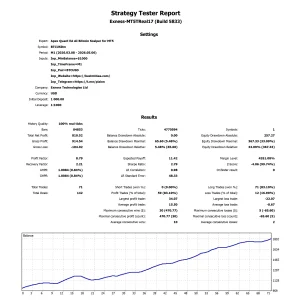
Apex Quant BTCUSD EA: AI Bitcoin Scalper for MT5
In stock
$0.00 $159.99Price range: $0.00 through $159.99
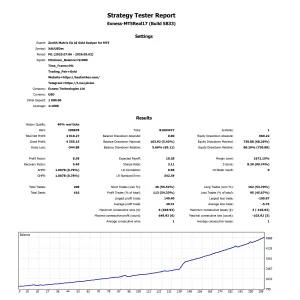
Zenith Matrix XAUUSD EA: AI Gold Scalper for MT5
In stock
$0.00 $899.99Price range: $0.00 through $899.99
Nexora Manus XAUUSD EA: AI Gold Scalper for MT5
In stock
$0.00 $699.99Price range: $0.00 through $699.99
Mythos Epic XAUUSD EA: AI Gold Scalper for MT5
In stock
$0.00 $849.99Price range: $0.00 through $849.99

Obsidian Aether EURUSD EA: AI Grid Scalper for MT5
In stock
$0.00 $797.99Price range: $0.00 through $797.99

AVA AIGPT5 XAUUSD EA: AI Gold Scalper for MT4
In stock
$0.00 $679.99Price range: $0.00 through $679.99


Golden Deer Holy Grail Indicator (Lifetime Premium)
In stock
Original price was: $109.99.$87.99Current price is: $87.99.
Powerful Forex VPS for MT4 & MT5 – Best Price
In stock
$44.99 $359.99Price range: $44.99 through $359.99


 Gold Forex EA