
7 Powerful Reasons to Use Free Laguerre RSI Indicator for Mean Reversion Trades


7 Powerful Reasons to Use Free Laguerre RSI Indicator for Mean Reversion Trades
Using a free Laguerre RSI indicator for mean reversion trades is a smart way to find high-probability reversal setups without cluttering your chart with too many tools. Laguerre RSI is a special version of the classic RSI that reacts faster to price while filtering out a lot of noise, which makes it a great fit for short-term mean reversion systems. TradingPedia+1
In this guide, you’ll learn what Laguerre RSI is, how it works, how to set it up for free, and how to build a complete mean reversion trading plan around it.
What Is the Laguerre RSI Indicator?
The Origin: John Ehlers and the Laguerre Concept
Laguerre RSI was developed by John F. Ehlers, a well-known engineer and technical analyst. He introduced it as part of his work on digital signal processing in finance, including his book Cybernetic Analysis for Stocks and Futures and the article Time Warp – Without Space Travel. InstaForex Support Portal+1
Ehlers used mathematical tools like the Laguerre transform to build indicators that:
- Use short look-back periods
- Stay smooth and less noisy
- React more quickly to real price changes
Laguerre RSI is one of these tools, designed as a smarter version of the classic RSI.
How Laguerre RSI Differs from Classic RSI
Classic RSI:
- Works on a scale from 0 to 100
- Uses a fixed look-back period like 14 bars
- Often becomes choppy and generates many false signals in sideways markets
Laguerre RSI:
- Works on a scale from 0 to 1 instead of 0–100
- Uses a Laguerre filter that blends current and previous prices with a parameter called gamma
- Tends to be smoother and creates clearer swings between oversold and overbought zones TradingPedia+1
Because it’s both smoother and more responsive, many traders find Laguerre RSI better for catching quick reversals without being whipsawed as often.
Why Laguerre RSI Fits Mean Reversion Trading
Mean reversion trading assumes price swings away from a “fair value” and then snaps back. Laguerre RSI helps you see those extremes:
- When Laguerre RSI dips deeply toward 0.0–0.15, market conditions may be oversold
- When it rises toward 0.85–1.0, the market may be overbought TradingPedia+1
In range-bound or mildly trending markets, these extremes often mark spots where price is likely to pull back or revert toward the mean. That’s exactly what you want for mean reversion trades.
How the Laguerre RSI Works Behind the Scenes
The Laguerre Filter, Gamma Parameter, and “Time Warp”
Under the hood, Laguerre RSI uses a four-step recursive filter (L0, L1, L2, L3). Each step mixes the current price with older values using a smoothing factor called gamma. InstaForex Support Portal+1
- Gamma is usually between 0.5 and 0.85
- Lower gamma (e.g., 0.5) → more aggressive, more signals
- Higher gamma (e.g., 0.8–0.85) → smoother, fewer but cleaner signals InstaForex Support Portal+1
Ehlers described this as a kind of time warp: low-frequency components (slow trends) are delayed more than high-frequency components (fast changes), which makes the indicator react quickly to recent price moves while still staying smooth. Wise Stock Trader+1
The 0–1 Scale, Overbought and Oversold Zones
Most Laguerre RSI tools plot values between 0 and 1:
- Below ~0.15–0.2 → oversold zone
- Above ~0.8–0.85 → overbought zone TradingPedia+1
Common rules:
- Buy when Laguerre RSI drops below a lower band (e.g., 0.2) and then crosses back up
- Sell/short when it rises above an upper band (e.g., 0.8) and then crosses back down
This fits naturally with mean reversion: you’re entering when price has stretched too far and shows signs of snapping back.
Strengths and Weaknesses of Laguerre RSI
Strengths
- Smoother than classic RSI
- More responsive to recent price moves
- Works well in range-bound markets
- Easy to interpret with clear zones
Weaknesses
- Can give false signals in strong trends (like most oscillators)
- Requires careful tuning of gamma and levels
- Not a complete strategy by itself; needs risk management, filters, and exits
Setting Up a Free Laguerre RSI Indicator for Mean Reversion Trades
This section focuses on how to actually get and use a free Laguerre RSI indicator for mean reversion trades on your trading platform.
Popular Platforms That Offer Laguerre RSI for Free
You don’t need to pay to start using Laguerre RSI. Many platforms provide it:
- TradingView – Several free community scripts labeled “Laguerre RSI” or “Ehlers Laguerre RSI” TradingView+1
- MetaTrader 4/5 (MT4/MT5) – Free custom indicators available via code libraries and forums
- cTrader, MotiveWave, NinjaTrader, AmiBroker – Often offer Laguerre RSI via free add-ons or user-shared studies Wise Stock Trader+1
Most of these are “plug and play”: you attach the indicator to a chart, and it appears in a separate window under price.
Suggested Default Settings for Beginners
A simple starting point:

- Gamma (or Alpha): 0.7 (a very common default) InstaForex Support Portal+1
- Overbought level: 0.8–0.85
- Oversold level: 0.15–0.2
- Timeframe: 15-minute, 1-hour, or 4-hour for swing or intraday trades
With these defaults, the indicator will generate:
- Fewer signals than a very low gamma
- Still enough entries for active trading
- Smooth waves that are easy to read
Customizing Levels for Different Markets and Volatility
You can adjust levels based on how “wild” your market is:
- Highly volatile assets (crypto, small-cap stocks)
- Lower level: maybe 0.1 or 0.12
- Upper level: maybe 0.9
- You only trade when price is truly stretched
- More stable markets (major forex pairs, large-cap indices)
- Lower level: 0.2
- Upper level: 0.8
You can also widen levels during news periods or high volatility days, so you’re not entering too early.
Core Mean Reversion Rules with Laguerre RSI
Simple Buy and Sell Rules Using Laguerre RSI
Here’s a basic mean reversion concept:
Long (buy) setup
- Laguerre RSI falls below your lower level (e.g., 0.15–0.2).
- Price moves away from a short-term moving average (e.g., 20-period SMA).
- Laguerre RSI crosses back above the lower level.
- Enter a long trade; place a stop under recent support.
Short (sell) setup
- Laguerre RSI rises above your upper level (e.g., 0.8–0.85).
- Price is extended above a short-term average.
- Laguerre RSI crosses back below the upper level.
- Enter a short (or take profits on longs); stop above recent resistance. TradingView+1
Avoiding Strong Trends and “Pinned” Readings
One key warning sign:
- If Laguerre RSI stays stuck near 1.0 for a long time, the uptrend is strong.
- If it stays stuck near 0.0, the downtrend is strong. InstaForex Support Portal+1
In these conditions:
- Avoid trading against the trend.
- Either skip mean reversion trades or switch to trend-following rules.
- You can add a trend filter, like a 200-period moving average, to avoid fighting big moves.
Exit Tactics, Profit Targets, and Stop Loss Ideas
Some practical exit ideas:
- Conservative exit: Exit when Laguerre RSI returns to the mid-zone (around 0.5).
- More aggressive profit: Hold until it reaches the opposite band (e.g., from 0.2 to 0.8).
- Time-based exit: Close after X bars if price hasn’t reverted.
- Stops:
- Place below/above recent swing highs or lows
- Or use ATR-based stops (e.g., 1.5–2× ATR)
Building a Full Mean Reversion Strategy
Best Timeframes and Markets (Forex, Stocks, Crypto)
Laguerre RSI mean reversion tends to work better in:
- Range-bound forex pairs like EUR/USD or AUD/NZD
- Large-cap stocks and indices that oscillate around fair value
- Select crypto pairs during consolidation phases UEEx Technology
Timeframes:
- 15-minute or 1-hour charts for intraday
- 4-hour or daily for swing trades
The idea is to catch moves that overshoot and then fade back, not to chase runaway trends.
Combining Laguerre RSI with Moving Averages and Bands
Laguerre RSI is stronger when paired with simple tools:
- Moving averages
- Use a 50- or 200-period MA as a trend filter.
- Only take longs if price is above the long MA.
- Only take shorts if price is below the long MA.
- Bollinger Bands or Keltner Channels
- When price touches or pierces the bands and Laguerre RSI is extreme, you have a stronger mean reversion signal.
This combination helps separate normal noise from truly stretched conditions.
Risk Management and Position Sizing
No indicator can save you from poor risk control. Consider:
- Risking no more than 1–2% of account equity per trade
- Using fixed fractional position sizing
- Limiting daily or weekly maximum drawdown
- Avoiding over-leveraging, especially in forex and crypto
With mean reversion, losing streaks can happen when markets suddenly trend hard. Good position sizing keeps you in the game.
Backtesting and Optimizing Laguerre RSI
A Simple Backtest Workflow
To check if your approach has an edge:
- Choose an instrument (e.g., EUR/USD) and timeframe.
- Use your Laguerre RSI settings and precise rules:
- Entry levels
- Stop losses
- Exits
- Run at least a few hundred historical trades.
- Track:
- Win rate
- Average win vs. average loss
- Maximum drawdown
- Profit factor
There are ready-made backtests for Laguerre-based RSI strategies in various platforms and blogs, showing it can work in both mean reversion and trend systems if tuned well. Quantified Strategies+1
Tuning Gamma and Levels Without Overfitting
Avoid the trap of “curve-fitting” to past data:
- Don’t endlessly tweak gamma (0.65 vs. 0.68 vs. 0.7) just to maximize past profit.
- Use reasonable ranges:
- Gamma: 0.6–0.8
- Levels: 0.1–0.2 and 0.8–0.9
- Test on one period, then validate on a different unseen period.
If performance completely collapses on new data, your settings are probably overfitted.
Forward Testing and Demo Trading
After backtesting:
- Trade the strategy on a demo account or with very small size.
- Track results for at least 4–8 weeks.
- Check if live performance is close to backtest expectations (while allowing for normal variance).
Only then consider scaling up risk.
Common Mistakes Traders Make with Laguerre RSI
Taking Every Signal in All Conditions
One of the biggest mistakes is treating Laguerre RSI as a magic buy/sell button:
- Traders take every oversold/overbought signal in all markets and all conditions.
- They ignore higher-timeframe trends or key support and resistance.
Fix:
- Add filters (trend, volatility, time of day).
- Use confluence: Laguerre RSI extreme + band touch + support/resistance.
Ignoring Volatility, Spread, and Slippage
Mean reversion trades often aim for modest profits, so:
- Large spreads or commissions can ruin your edge.
- Illiquid assets can have slippage that eats into profits.
Focus on:
- Liquid instruments with tight spreads
- Reasonable lot sizes
- Avoiding very thin overnight sessions where spreads can explode
Trading During News, Gaps, and Illiquid Sessions
News releases, earnings, and macro events can cause:
- Sudden spikes
- Large gaps
- Extended trends that “steamroll” your mean reversion entry
Many traders simply:
- Pause trading around major scheduled news
- Avoid holding short-term mean reversion positions across big announcements
Advanced Tips and Variations
Multi-Timeframe Laguerre RSI Confirmation
You can increase selectivity with multi-timeframe logic:
- Use Laguerre RSI on a higher timeframe (e.g., 4H) to define the context.
- Trade mean reversion signals on a lower timeframe (e.g., 1H) only in line with higher-TF conditions.
Example:

Powerful Forex VPS for MT4 & MT5 – Best Price
In stock
$44.99 $359.99Price range: $44.99 through $359.99| Validity | Monthly, Quarterly, Semi Annually, Annually |
|---|
- 4H Laguerre RSI is near the upper zone → market stretched.
- 1H Laguerre RSI gives an overbought signal with a reversal pattern.
- You take a short mean reversion with added confidence.
Alerts, Automation, and Algorithmic Execution
Laguerre RSI is well-suited for semi-automatic or fully automated systems:
- Set alerts in platforms like TradingView when:
- Laguerre RSI crosses below 0.15 or above 0.85
- Use bots/algos (where allowed) to:
- Scan many markets at once
- Execute rules consistently without emotion FMZ+1
Always test your rules carefully before letting automation handle real money.
Mixing Mean Reversion and Trend-Following Elements
You don’t have to choose one style only:
- In ranges, use Laguerre RSI extremes for mean reversion.
- In trends, use it as:
- A pullback tool (buying dips in uptrends when Laguerre RSI is oversold)
- A way to stay in trades when RSI stays in one half of the range
This hybrid approach can smooth your equity curve across different market regimes.
FAQs About Laguerre RSI and Mean Reversion
1. What is the main benefit of using Laguerre RSI instead of classic RSI?
Laguerre RSI is generally smoother and more responsive than classic RSI. Thanks to the Laguerre filter and gamma parameter, it can reduce noise while still reacting quickly to recent price changes, which is especially useful for mean reversion trades.
2. Can I use the free laguerre rsi indicator for mean reversion trades on any market?
Yes, you can use it on forex, stocks, indices, and crypto, but it tends to work best in markets and timeframes that show regular oscillations and aren’t in extremely strong trends. Always backtest on the specific asset you plan to trade.
3. What gamma value should I start with for mean reversion?
A good starting point is gamma = 0.7, with overbought at 0.8–0.85 and oversold at 0.15–0.2. From there, you can gently adjust gamma and levels based on your market’s behavior and your backtest results. InstaForex Support Portal+1
4. Is Laguerre RSI good for scalping?
It can be, but scalping on very low timeframes (like 1-minute) brings extra risks:
- Higher impact of spreads and slippage
- More noise, even with a smooth indicator
If you want to scalp, make sure you use very liquid pairs, tight spreads, and strict risk rules.
5. How do I know if the market is suitable for mean reversion trades?
Signs that mean reversion may work:
- Price moves within clear horizontal ranges
- Laguerre RSI swings regularly between low and high zones
- No major news events are driving long, one-directional moves
If Laguerre RSI stays pinned near 0 or 1 for long stretches, the market may be trending strongly, and pure mean reversion trades become more dangerous.
6. Can I rely only on Laguerre RSI to make trading decisions?
It’s not wise to rely on a single indicator. Laguerre RSI should be one part of a complete trading plan that includes:
- Trend filters
- Clear entry and exit rules
- Risk management and position sizing
- Backtesting and forward testing
7. Where can I learn more about the theory behind Laguerre RSI?
For a deeper dive, you can look up John Ehlers’ work on digital signal processing in trading and his article Time Warp – Without Space Travel. Educational sites like Investopedia also explain the general RSI idea, which helps you understand how Laguerre RSI extends it. TradingPedia+1
Conclusion
The free laguerre rsi indicator for mean reversion trades gives you a powerful way to spot extremes in price and plan reversal entries with clear visual cues. By combining the smoothness of the Laguerre filter with simple overbought/oversold rules, it helps you find trade ideas in markets that like to swing back and forth.
Still, Laguerre RSI is not a magic bullet. It works best when you:
- Use sensible gamma and level settings
- Filter out strong trends and news-driven moves
- Add structure with moving averages, bands, and solid risk management
- Test your ideas thoroughly before trading real money
If you treat Laguerre RSI as one part of a complete, rules-based trading system, it can become a reliable tool in your mean reversion toolkit.
Most Popular Forex EA
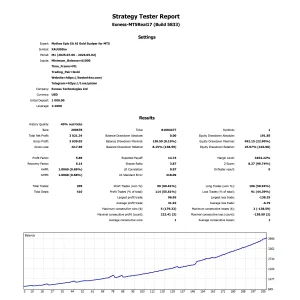
Onix Stratos XAUUSD EA: AI Smart Scalper for MT5
In stock
$0.00 $999.99Price range: $0.00 through $999.99
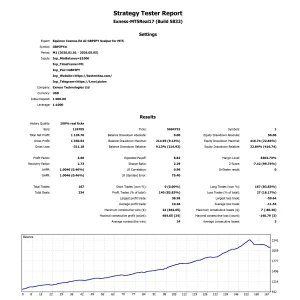
Elysium Vortex EURCAD EA: AI EURCAD Scalper for MT5
In stock
$0.00 $199.99Price range: $0.00 through $199.99
Equinox Cosmos GBPJPY EA: AI GBPJPY Scalper for MT5
In stock
$0.00 $399.99Price range: $0.00 through $399.99
Apex Quant BTCUSD EA: AI Bitcoin Scalper for MT5
In stock
$0.00 $159.99Price range: $0.00 through $159.99
Zenith Matrix XAUUSD EA: AI Gold Scalper for MT5
In stock
$0.00 $899.99Price range: $0.00 through $899.99
Nexora Manus XAUUSD EA: AI Gold Scalper for MT5
In stock
$0.00 $699.99Price range: $0.00 through $699.99
Mythos Epic XAUUSD EA: AI Gold Scalper for MT5
In stock
$0.00 $849.99Price range: $0.00 through $849.99

Obsidian Aether EURUSD EA: AI Grid Scalper for MT5
In stock
$0.00 $797.99Price range: $0.00 through $797.99

AVA AIGPT5 XAUUSD EA: AI Gold Scalper for MT4
In stock
$0.00 $679.99Price range: $0.00 through $679.99


Golden Deer Holy Grail Indicator (Lifetime Premium)
In stock
Original price was: $109.99.$87.99Current price is: $87.99.
Powerful Forex VPS for MT4 & MT5 – Best Price
In stock
$44.99 $359.99Price range: $44.99 through $359.99


 Gold Forex EA