
Fibonacci Retracement 61.8 Golden Ratio Trades: Mastering the Art of Precision Trading


Introduction to Fibonacci Retracement 61.8 Golden Ratio Trades
Fibonacci retracement has become one of the most popular tools among traders worldwide. Whether you’re trading stocks, forex, or cryptocurrencies, understanding the 61.8% golden ratio can significantly improve your trading accuracy. But why does this level hold such importance?
The 61.8% retracement level is derived from the golden ratio (φ), an irrational number approximately equal to 1.618. In trading, this ratio is used to identify potential reversal points, allowing traders to enter or exit positions with higher probability. When prices retrace to this level, it often acts as strong support or resistance, signaling potential trend continuation or reversal.
In essence, mastering Fibonacci retracement at 61.8% is like having a roadmap for the markets—guiding traders to anticipate turning points with greater confidence.
Understanding the Golden Ratio in Trading
Definition of the Golden Ratio (Phi)
The golden ratio, often denoted by φ (phi), appears throughout nature, architecture, and even human anatomy. In trading, it represents a natural harmony in price movements, suggesting that markets may retrace a predictable portion of a trend before continuing in the original direction.
Historical Significance in Markets
Traders have noticed Fibonacci patterns in price charts for decades. From stock markets to forex and crypto, the 61.8% level frequently marks significant price corrections, indicating a natural rhythm that echoes in human behavior.
Examples in Stock Charts and Forex
For instance, in a bullish trend, if a stock rises from $100 to $150, a 61.8% retracement would predict a potential bounce near $130. Traders often use this zone to buy low in an uptrend or sell high in a downtrend, leveraging the psychological impact of the golden ratio on market participants.
Fibonacci Levels Explained
Key Fibonacci Retracement Levels
Fibonacci retracement levels are percentages derived from the Fibonacci sequence. Common levels include:
- 23.6% – Minor retracement, often ignored in volatile markets
- 38.2% – Moderate retracement, useful for short-term trades
- 50% – Psychological midpoint, not a true Fibonacci level
- 61.8% – The golden ratio, the most significant for reversals
- 78.6% – Deep retracement, often signals trend exhaustion
How 61.8% Differs from Others
The 61.8% level is considered the most crucial because it often acts as a key decision point for traders. Unlike shallower retracements, this level reflects stronger market sentiment and is widely monitored, increasing its effectiveness as support or resistance.

Role in Support and Resistance
In practical terms, when a price retraces to 61.8%, it either:
- Bounces back, indicating trend continuation
- Breaks through, signaling a potential trend reversal
This dual role makes it indispensable in trading strategies.
How Fibonacci Retracement 61.8 Works in Practice
Identifying Swing High and Swing Low
The first step in applying Fibonacci retracement is to identify the trend’s high and low points. In an uptrend:
- Swing Low = starting point
- Swing High = ending point
In a downtrend, reverse the points.
Calculating 61.8% Retracement
The 61.8% retracement level is calculated as:Retracement Level=Swing High−0.618×(Swing High−Swing Low)
This formula pinpoints the exact price zone where a reversal is most likely.
Entry, Exit, and Stop-Loss Strategies
- Entry: Place buy orders near 61.8% in an uptrend
- Exit: Target previous highs or Fibonacci extensions
- Stop-Loss: Set slightly below the 61.8% retracement to minimize risk
Setting Up Trades Using the 61.8 Golden Ratio
Trend Continuation vs Reversal Trades
- Trend continuation: Enter trades when price bounces from 61.8%
- Trend reversal: Look for breakouts below 61.8% in uptrends or above in downtrends
Combining with Candlestick Patterns
Candlestick patterns, such as hammer, doji, or engulfing, increase the reliability of 61.8% trades. A bullish hammer near the 61.8% retracement is a strong buy signal.
Risk Management Essentials
Always use proper position sizing and stop-loss placement. The 61.8% level is powerful but not foolproof—market context and volume must confirm signals.
Common Trading Strategies
- Swing Trading: Enter at 61.8% retracement and ride the trend for several days
- Day Trading: Use intraday charts and shorter Fibonacci levels
- Forex Trading: Identify key retracement levels in major currency pairs
- Crypto Trading: Volatile markets benefit from combining 61.8% retracement with trend indicators
Indicators and Tools to Enhance Accuracy
- Moving Averages: Confirm trend direction
- RSI / MACD: Indicate overbought or oversold conditions
- Trendlines & Chart Patterns: Validate the 61.8% retracement zone
Combining Fibonacci with other technical tools enhances trade reliability.
Mistakes to Avoid
- Over-reliance on Fibonacci without confirmation
- Ignoring market context and trend strength
- Misplacing swing high or low points
Avoiding these pitfalls ensures more consistent results.
Case Studies
- Stock Example: Apple retraced near 61.8% before resuming its uptrend in 2023
- Forex Example: EUR/USD bounce at 61.8% retracement during a strong trend
- Crypto Example: Bitcoin corrected to 61.8% retracement before rallying
These cases demonstrate the practical power of the 61.8 golden ratio.

Powerful Forex VPS for MT4 & MT5 – Best Price
In stock
$44.99 $359.99Price range: $44.99 through $359.99| Validity | Monthly, Quarterly, Semi Annually, Annually |
|---|
Psychology Behind Fibonacci Trading
Traders follow Fibonacci levels because markets often mirror human behavior. Emotional reactions, fear, and greed create predictable retracements. Using the 61.8% level requires discipline, avoiding impulsive trades or FOMO-driven decisions.
Advanced Techniques
- Fibonacci Extensions & Projections: Predict future price targets
- Multiple Fibonacci Levels: Combine 38.2%, 50%, and 61.8% for confluence
- Dynamic Fibonacci: Adjust levels during trending markets
Advanced traders leverage these techniques to refine entries and exits.
Risk Management
- Position Sizing: Only risk 1–2% of capital per trade
- Stop-Loss Placement: Just below 61.8% retracement
- Profit Targets: Use prior swing highs or Fibonacci extensions
Proper risk management ensures long-term trading sustainability.
Tools and Software for Fibonacci Trading
- TradingView: Interactive charting and retracement tools
- MetaTrader 4/5: Automated Fibonacci indicators
- Fibonacci Scanners: Identify high-probability retracement zones
Pros and Cons of 61.8 Golden Ratio Trades
Advantages:
- High probability of reversal identification
- Works across markets and timeframes
- Easy to integrate with other indicators
Limitations:
- Not always accurate; market can break retracement
- Requires confirmation from trend and volume
- Psychological bias if over-relied upon
Frequently Asked Questions (FAQs)
- How reliable is the 61.8% retracement?
It’s one of the most reliable Fibonacci levels but should be combined with other indicators for confirmation. - Can I trade only using Fibonacci?
While possible, relying solely on Fibonacci increases risk. Combining with trend and momentum indicators is safer. - What’s the difference between 61.8% and 50% retracement?
50% is psychological and arbitrary, while 61.8% reflects the golden ratio and is naturally significant in markets. - Does Fibonacci work in crypto trading?
Yes, especially in volatile markets like Bitcoin, Ethereum, and altcoins. - Should I combine Fibonacci with indicators?
Absolutely. Indicators like RSI, MACD, and moving averages improve trade accuracy. - What are the best timeframes for Fibonacci trades?
Swing traders benefit from daily or 4-hour charts, while day traders prefer 5–15 minute charts.
Conclusion
Mastering Fibonacci retracement 61.8 golden ratio trades gives traders a powerful edge in predicting market reversals and continuations. By understanding the golden ratio, combining it with candlestick patterns and technical indicators, and practicing disciplined risk management, traders can enhance their decision-making and improve profitability.
Most Popular Forex EA
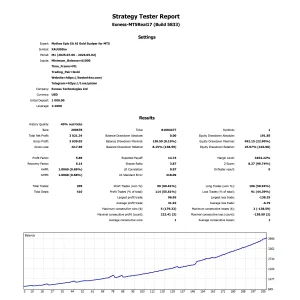
Onix Stratos XAUUSD EA: AI Smart Scalper for MT5
In stock
$0.00 $999.99Price range: $0.00 through $999.99
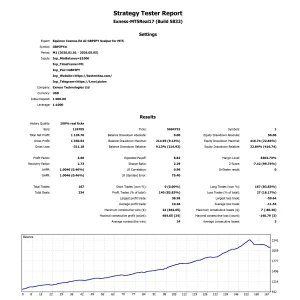
Elysium Vortex EURCAD EA: AI EURCAD Scalper for MT5
In stock
$0.00 $199.99Price range: $0.00 through $199.99
Equinox Cosmos GBPJPY EA: AI GBPJPY Scalper for MT5
In stock
$0.00 $399.99Price range: $0.00 through $399.99
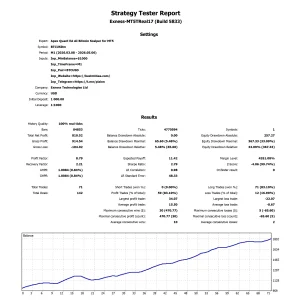
Apex Quant BTCUSD EA: AI Bitcoin Scalper for MT5
In stock
$0.00 $159.99Price range: $0.00 through $159.99
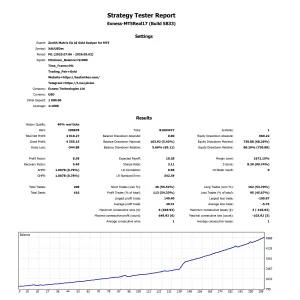
Zenith Matrix XAUUSD EA: AI Gold Scalper for MT5
In stock
$0.00 $899.99Price range: $0.00 through $899.99
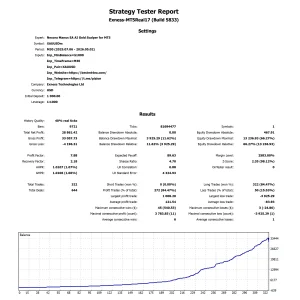
Nexora Manus XAUUSD EA: AI Gold Scalper for MT5
In stock
$0.00 $699.99Price range: $0.00 through $699.99
Mythos Epic XAUUSD EA: AI Gold Scalper for MT5
In stock
$0.00 $849.99Price range: $0.00 through $849.99

Obsidian Aether EURUSD EA: AI Grid Scalper for MT5
In stock
$0.00 $797.99Price range: $0.00 through $797.99

AVA AIGPT5 XAUUSD EA: AI Gold Scalper for MT4
In stock
$0.00 $679.99Price range: $0.00 through $679.99


Golden Deer Holy Grail Indicator (Lifetime Premium)
In stock
Original price was: $109.99.$87.99Current price is: $87.99.
Powerful Forex VPS for MT4 & MT5 – Best Price
In stock
$44.99 $359.99Price range: $44.99 through $359.99


 Gold Forex EA