
Leverage in Forex Trading: Complete Guide for Beginners



What Is Leverage in Forex Trading Explained: The Ultimate Guide
Understanding what is leverage in forex trading explained is one of the most important steps for any beginner entering the currency markets. Leverage allows you to control a large position using only a small portion of your own money, which can feel like a superpower—if used wisely. This guide breaks everything down in a simple, friendly way so you can truly grasp how leverage works, why traders use it, and how you can use it safely.
Introduction to Forex Trading and Leverage
Forex trading is the buying and selling of currencies, and leverage is the tool that allows traders to take larger positions than their account balance would normally allow. Because currency movements are typically small, leverage helps traders amplify those tiny price changes into meaningful profits. But just like a double-edged sword, leverage can cut both ways.
Why Understanding Leverage Matters
If you don’t understand leverage, you’re essentially walking into the forex market blindfolded. You might see fast profits at first, but without proper knowledge, you could also see your account wiped out just as quickly. Smart traders treat leverage with respect—not fear.
How Leverage Became a Key Part of Modern Forex Markets
Forex brokers introduced leverage to make currency trading more accessible, especially for retail traders. Since institutions traditionally dominated currency markets, leverage helped level the playing field, allowing smaller traders to participate.
What Is Leverage in Forex Trading Explained (Core Definition)
Leverage in forex trading is the ability to control a large trade with a relatively small amount of capital. It’s expressed as a ratio—like 1:50 or 1:500.
How Leverage Works Behind the Scenes
When you use leverage, your broker lends you money to open a much bigger trade. You don’t actually borrow cash the way you would with a loan; instead, the broker temporarily gives you “buying power.”
Leverage Ratios: 1:10, 1:50, 1:100, 1:500 and What They Mean
- 1:10 leverage → For every $1 you deposit, you control $10
- 1:50 leverage → $1 controls $50
- 1:100 leverage → $1 controls $100
- 1:500 leverage → $1 controls $500
The higher the ratio, the less margin you need—and the higher the risk.
Margin Requirements and Buying Power
Margin is the amount of your own money the broker locks to open a leveraged trade.
Example: With 1:100 leverage, a $1,000 position requires just $10 of margin.
Real-World Examples of Leverage
- A trader with $100 uses 1:500 leverage to open a $50,000 trade.
- If the market moves 1% in their favor, they gain $500.
- If the market moves 1% against them, they lose $500—which is 5× more than their deposit.
Benefits of Using Leverage in Forex
Leverage isn’t evil—it’s actually a valuable tool when used properly.
Increasing Market Exposure
Leverage lets you take advantage of small currency movements that wouldn’t be profitable without amplification.
Flexibility for Small Accounts
You don’t need thousands of dollars to participate in forex. Even small accounts can make significant trades thanks to leverage.
Enhancing Trading Opportunities
Leverage helps diversify strategies. Traders can explore more pairs or open multiple small positions rather than a single big one.
Risks of Leverage Every Trader Should Know
Despite its benefits, leverage carries real risks.
Amplified Losses
Just as leverage amplifies profits, it also amplifies losses. A tiny price shift against you can lead to big damage.
Margin Calls and Stop-Out Levels
If your account drops below margin requirements, the broker may close your trades automatically to prevent deeper losses.
Emotional and Psychological Risks
High leverage can tempt traders into taking oversized risks, leading to panic and poor decision-making.

Choosing the Right Leverage as a Beginner
Not all leverage levels are suitable for new traders.
Low vs. High Leverage for Different Trading Styles
- Scalpers often use higher leverage.
- Swing traders prefer moderate leverage.
- Beginners should start with low leverage such as 1:10 or 1:20.
Comparing Brokers’ Leverage Options
Different brokers offer varying leverage caps depending on regulations. For example:
- U.S. brokers: up to 1:50
- European brokers: up to 1:30
- Offshore brokers: up to 1:500 or more
How to Manage Leverage Safely
Risk management is your best friend in forex.
Risk Management Tools
Several tools protect your account.
Stop-Loss Strategies
A stop-loss limits your losses by automatically closing trades at a set level.
Position Sizing Techniques
Never risk more than 1–2% of your account on a single trade.
Developing a Long-Term Leverage Strategy
Successful traders use a consistent risk plan—not random guesswork.
Common Myths About Forex Leverage
Let’s clear up a few misunderstandings.
Myth 1: Higher Leverage Means Higher Profit
Higher leverage only increases potential profit—not guaranteed profit. It also increases risk at the same speed.
Myth 2: Leverage Is Only for Experts
Even beginners can use leverage, as long as it’s kept low and controlled.

FAQs About What Is Leverage in Forex Trading Explained
1. Is leverage good or bad for forex beginners?
Leverage is neither good nor bad—it’s simply a tool. However, beginners should use low leverage to reduce risk.
2. Does higher leverage mean faster profits?
It can, but it also means faster losses. Balance is key.
3. What is the safest leverage to use?
Most experts recommend 1:10 or 1:20 for new traders.
4. Can I trade forex without leverage?
Yes, but profits will be much smaller since currency price movements are tiny.
5. Why do brokers offer very high leverage like 1:500?
To attract traders who want flexibility, especially experienced ones.
6. How does margin relate to leverage?
Margin is the amount of money the broker uses from your account to open a leveraged trade.
For deeper learning, you can also explore:
https://www.investopedia.com/
Conclusion
Understanding what is leverage in forex trading explained helps you approach the market with confidence and clarity. Leverage can multiply opportunities, but it can also multiply risks. By using proper risk management, choosing the right leverage ratio, and staying disciplined, you can benefit from this powerful trading tool while protecting your capital.
Most Popular Forex EA
Onix Stratos XAUUSD EA: AI Smart Scalper for MT5
In stock
$0.00 $999.99Price range: $0.00 through $999.99
Elysium Vortex EURCAD EA: AI EURCAD Scalper for MT5
In stock
$0.00 $199.99Price range: $0.00 through $199.99
Equinox Cosmos GBPJPY EA: AI GBPJPY Scalper for MT5
In stock
$0.00 $399.99Price range: $0.00 through $399.99
Apex Quant BTCUSD EA: AI Bitcoin Scalper for MT5
In stock
$0.00 $159.99Price range: $0.00 through $159.99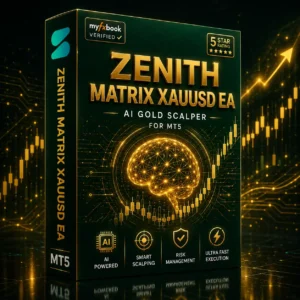
Zenith Matrix XAUUSD EA: AI Gold Scalper for MT5
In stock
$0.00 $899.99Price range: $0.00 through $899.99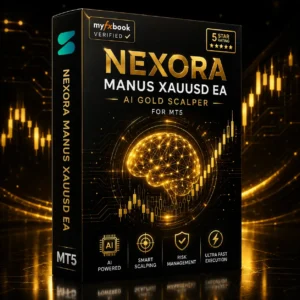
Nexora Manus XAUUSD EA: AI Gold Scalper for MT5
In stock
$0.00 $699.99Price range: $0.00 through $699.99
Mythos Epic XAUUSD EA: AI Gold Scalper for MT5
In stock
$0.00 $849.99Price range: $0.00 through $849.99
Obsidian Aether EURUSD EA: AI Grid Scalper for MT5
In stock
$0.00 $797.99Price range: $0.00 through $797.99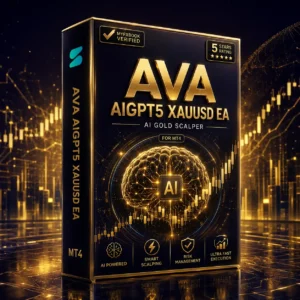
AVA AIGPT5 XAUUSD EA: AI Gold Scalper for MT4
In stock
$0.00 $679.99Price range: $0.00 through $679.99

Golden Deer Holy Grail Indicator (Lifetime Premium)
In stock
Original price was: $109.99.$87.99Current price is: $87.99.
Windows VPS for MT4 & MT5
In stock
$44.99 $359.99Price range: $44.99 through $359.99



 Gold Forex EA