
7 Powerful Insights on Stock Market Correlation with Forex for Smarter Trading


Understanding the Powerful Stock Market Correlation with Forex
The global financial markets are deeply interconnected, and one of the most fascinating relationships is the stock market correlation with forex. Whether you’re a beginner or a seasoned trader, understanding how these two massive markets interact can open doors to more informed, strategic, and profitable trading decisions. Within the first moments of exploring this topic, it becomes clear that the stock–forex connection is shaped by economics, investor psychology, and worldwide capital flows.
Introduction to Global Financial Market Relationships
The world’s financial systems don’t operate in isolation. Stocks, currencies, commodities, and bonds all communicate through price action—even if most traders don’t realize it. When stocks rally, certain currencies strengthen. When fear rises, money quickly flees into safe-haven assets. These interactions form predictable patterns that traders can use to forecast movements.
Why Cross-Market Correlations Matter for Traders
Learning how markets correlate helps you:
- Avoid contradictory positions
- Identify leading indicators across markets
- Manage risk more effectively
- Predict volatility before it happens
When stocks and forex align in direction, traders benefit from clearer market signals. But when correlations break down, those changes may reveal a major upcoming shift in the global economy.
What Is Stock Market Correlation with Forex?
At its core, this correlation measures how stock indices (like the S&P 500 or Nikkei 225) move in relation to currency pairs (like USD/JPY or EUR/USD). When both move in the same direction consistently, the correlation is positive. When they move in opposite directions, it’s negative.
How Stock Indices Move in Relation to Currency Pairs
For example:
- Rising U.S. stock prices often strengthen USD
- Falling Japanese stocks can strengthen JPY (a safe haven)
These patterns help traders anticipate moves in either market by watching the other.
Positive vs. Negative Correlations Explained
A positive correlation means both markets move together.
A negative correlation means they move in opposite directions.
Understanding the type of correlation allows traders to:
- Create safer hedging strategies
- Predict price reversals
- Confirm trade entries using multi-market signals
Key Drivers Behind the Stock–Forex Relationship
Interest Rates and Central Bank Policies
Interest rate decisions influence everything—from corporate borrowing costs to international currency demand. Higher rates often boost a country’s currency but may pressure stock markets due to increased financial costs.
Global Risk Sentiment and Market Psychology
When investors feel confident, they move capital into stocks and risk-sensitive currencies such as AUD and NZD.
When fear grows, money rushes to safety in JPY and CHF, creating strong negative correlations.
Economic Indicators and Monetary Stability
Reports like GDP, unemployment, and inflation shape expectations for both equity markets and currency values.

Major Stock Indices and Their Currency Counterparts
S&P 500 and USD Performance
When the U.S. stock market rises, foreign capital flows into the U.S., often strengthening the dollar.
Nikkei 225 and JPY Volatility
Japan’s export-driven economy means a strong yen can hurt stock performance, creating a negative correlation.
FTSE 100 and GBP Sensitivity
A weaker British pound can boost multinational companies listed on the FTSE 100, often pushing the index upward.
How Stock Market Movements Influence Forex Trends
Capital Flows and Safe-Haven Shifts
When investors adjust stock positions, massive amounts of money move across borders, shifting currency exchange rates.
Corporate Earnings Impact on Local Currencies
Strong earnings attract foreign investment, strengthening the local currency.
How Forex Movements Influence Stock Market Behavior
Strong vs. Weak Domestic Currency Effects on Equities
A strong currency lowers import costs but can hurt exports.
A weak currency boosts exports but raises import costs.
Export-Driven Economies and Exchange Rate Impacts
Countries like Japan and Germany rely heavily on currency fluctuations to maintain global competitiveness.
Measuring Stock–Forex Correlation Accurately
Using Correlation Coefficients
A value close to +1 or -1 shows a strong relationship, while 0 indicates no correlation.
Timeframes and Volatility Adjustments
Correlations change over time, especially during major economic events.
Real-World Examples of Market Correlations
USD/JPY and the Japanese Stock Market
Often negatively correlated due to Japan’s export structure.
EUR/USD and European Equity Performance
A weaker euro generally supports European stock growth.
Trading Strategies Based on Stock–Forex Correlations
Hedging Equity Portfolios with Currency Positions
Traders can reduce exposure by balancing stock and currency trades.
Intermarket Analysis for Predictive Trading
Using one market to forecast another strengthens decision-making.
Identifying Breakdowns in Expected Correlation Patterns
When correlations fail, it often signals deeper economic changes.
Common Mistakes Traders Make When Using Correlations
Overreliance on Short-Term Data
Short moves do not always reflect long-term relationships.
Ignoring Macro-Economic Shifts
Ignoring major announcements can lead to poor trading decisions.
Tools and Platforms to Track Correlations
Heat Maps and Statistical Dashboards
Platforms provide real-time correlation readings.
Economic Calendars and Volatility Alerts
Staying informed helps avoid surprise moves.

Powerful Forex VPS for MT4 & MT5 – Best Price
In stock
$44.99 $359.99Price range: $44.99 through $359.99| Validity | Monthly, Quarterly, Semi Annually, Annually |
|---|
Future of Global Market Interdependence
AI-Driven Market Analysis
AI helps analyze correlations faster and more accurately.
Increasing Integration Across Financial Systems
Globalization ensures markets remain interconnected.
FAQs
1. What is the main reason behind the stock market correlation with forex?
It’s largely driven by investor sentiment, interest rates, and global capital flows.
2. Do correlations remain constant over time?
No—correlations shift during economic crises, political changes, and market cycles.
3. Can beginners use correlation to trade?
Absolutely! It helps confirm trends and avoid contradictory trades.
4. Which currency pairs are most influenced by stock markets?
USD/JPY, AUD/USD, EUR/USD, and GBP/USD often show strong patterns.
5. Is correlation enough to make trading decisions?
No. It should support—not replace—technical and fundamental analysis.
6. Where can I find reliable correlation data?
You can use resources like Investing.com or TradingView for correlation tools.
(Example external link: https://www.investing.com)
Conclusion
Understanding the stock market correlation with forex gives traders a powerful advantage. These two markets dance together in complex but predictable ways—offering signals, patterns, and opportunities for anyone willing to study their interactions. With the right knowledge, traders can reduce risk, enhance precision, and make smarter financial decisions in a highly interconnected global economy.
Most Popular Forex EA
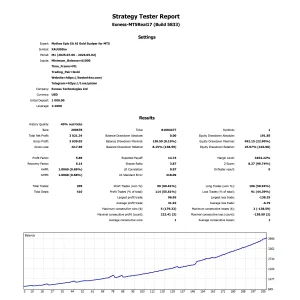
Onix Stratos XAUUSD EA: AI Smart Scalper for MT5
In stock
$0.00 $999.99Price range: $0.00 through $999.99
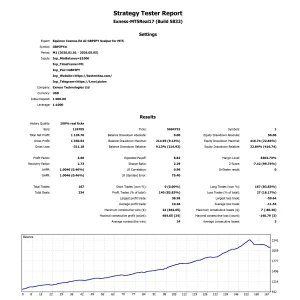
Elysium Vortex EURCAD EA: AI EURCAD Scalper for MT5
In stock
$0.00 $199.99Price range: $0.00 through $199.99
Equinox Cosmos GBPJPY EA: AI GBPJPY Scalper for MT5
In stock
$0.00 $399.99Price range: $0.00 through $399.99
Apex Quant BTCUSD EA: AI Bitcoin Scalper for MT5
In stock
$0.00 $159.99Price range: $0.00 through $159.99
Zenith Matrix XAUUSD EA: AI Gold Scalper for MT5
In stock
$0.00 $899.99Price range: $0.00 through $899.99
Nexora Manus XAUUSD EA: AI Gold Scalper for MT5
In stock
$0.00 $699.99Price range: $0.00 through $699.99
Mythos Epic XAUUSD EA: AI Gold Scalper for MT5
In stock
$0.00 $849.99Price range: $0.00 through $849.99

Obsidian Aether EURUSD EA: AI Grid Scalper for MT5
In stock
$0.00 $797.99Price range: $0.00 through $797.99

AVA AIGPT5 XAUUSD EA: AI Gold Scalper for MT4
In stock
$0.00 $679.99Price range: $0.00 through $679.99


Golden Deer Holy Grail Indicator (Lifetime Premium)
In stock
Original price was: $109.99.$87.99Current price is: $87.99.
Powerful Forex VPS for MT4 & MT5 – Best Price
In stock
$44.99 $359.99Price range: $44.99 through $359.99


 Gold Forex EA