Ascending Channel Trading Strategy


Introduction
In the world of trading, spotting clear trends is one of the most reliable ways to make informed decisions. One popular chart pattern that traders rely on is the ascending channel. This pattern, also known as a rising channel, provides a visual framework for understanding price movement, identifying potential trade setups, and managing risk effectively.
An ascending channel trading strategy focuses on leveraging these upward-sloping price channels to maximize profit while minimizing losses. In this article, we’ll explore the essential components of ascending channels, teach you how to set up trades, and highlight strategies that can boost your trading performance.
Understanding Ascending Channels
An ascending channel is a chart pattern formed by drawing two parallel trendlines: one connecting higher highs (resistance) and the other connecting higher lows (support). The upward slope indicates a bullish trend, suggesting that buyers are in control.
Key Characteristics:

- Higher highs and higher lows: The defining feature of an ascending channel.
- Parallel trendlines: Both support and resistance lines move upward at roughly the same slope.
- Consistent price action: Price oscillates between the channel boundaries until a breakout occurs.
Difference Between Ascending Channels and Other Chart Patterns
Understanding how ascending channels differ from other patterns is crucial:
- Descending channels: Trendlines slope downward; traders often look for short-selling opportunities.
- Horizontal channels: Price moves sideways; ideal for range trading, not trend following.
- Wedges: Slanting trendlines converge; often signal potential reversals rather than continuation.
Recognizing these distinctions helps traders avoid misinterpretations and poor trade setups.
Key Components of an Ascending Channel
Trendlines, Support, and Resistance
- Support line: Connects higher lows; acts as a “floor” where buyers enter.
- Resistance line: Connects higher highs; serves as a “ceiling” where sellers step in.
- Channel slope: Steeper channels indicate stronger bullish momentum but may be prone to sudden breakouts.
Volume Analysis in Ascending Channels
Volume plays a key role in confirming the validity of the channel. Increasing volume on upward moves strengthens the trend, while declining volume may signal weakening momentum or a potential reversal.
Setting Up the Ascending Channel Trading Strategy
Choosing the Right Timeframe
- Intraday trading: Focus on 5-min to 1-hour charts for short-term opportunities.
- Swing trading: 4-hour or daily charts provide medium-term trend setups.
- Long-term trading: Weekly charts help investors spot sustained bullish trends.
Entry Points in Ascending Channel Strategy
- Buying near support: Enter trades when price touches the lower trendline.
- Breakout entry: Enter trades when price breaks above the resistance line, signaling acceleration.
Exit Strategies and Profit Targets
- Resistance exit: Close positions near the upper trendline for predictable profits.
- Trailing stops: Lock in profits as price continues upward.
- Breakout exit: Ride the trend if a strong breakout occurs above resistance.
Risk Management in Ascending Channel Trading
Proper risk management ensures traders survive losing streaks. Key tips include:
- Stop-loss placement: Just below support for long trades.
- Risk-reward ratio: Maintain at least 1:2 or higher.
- Position sizing: Adjust trade size according to account balance and volatility.
Common Mistakes to Avoid
- Misidentifying the channel or ignoring the slope.
- Entering trades without confirmation from volume or indicators.
- Overleveraging positions, especially during volatile moves.
Combining Ascending Channel Strategy with Technical Indicators
Enhance your trades by integrating indicators:
- RSI (Relative Strength Index): Confirms overbought or oversold conditions.
- MACD: Signals trend continuation or weakening momentum.
- Moving averages: Provide dynamic support/resistance and trend alignment.
Practical Examples and Case Studies
Traders can learn by studying real-world charts. For example:
- Case Study 1: Stock XYZ consistently bounced off the support line, generating multiple profitable entries.
- Case Study 2: A breakout above resistance with high volume led to a 15% price surge in one week.
Backtesting this strategy on historical data is recommended to validate effectiveness before live trading.
Advantages of Using Ascending Channel Trading Strategy
- High-probability setups aligned with the trend.
- Clear visual cues for entry and exit points.
- Flexibility across multiple timeframes.
Limitations and Challenges
- False breakouts can trigger premature trades.
- Channels may flatten or reverse, invalidating the strategy.
- Requires careful observation and discipline for timing entries and exits.
Tools and Software for Ascending Channel Trading
- TradingView: Advanced charting tools with trendline drawing features.
- MetaTrader 4/5: Supports automated alerts and technical analysis.
- Thinkorswim: Professional-level charts with customizable indicators.
FAQs About Ascending Channel Trading Strategy
- What is an ascending channel in trading?
An ascending channel is a bullish chart pattern where price moves between parallel upward-sloping trendlines. - How do I identify a valid ascending channel?
Look for consistent higher highs and higher lows with parallel trendlines. - Can I use this strategy for any market?
Yes, it works in stocks, forex, cryptocurrencies, and commodities. - When should I enter a trade?
Ideally near the support line or after a confirmed breakout above resistance. - How do I manage risk?
Use stop-loss orders, maintain a favorable risk-reward ratio, and adjust position sizes. - What indicators complement this strategy?
RSI, MACD, and moving averages can provide additional confirmation for trades.
Conclusion
The ascending channel trading strategy is a powerful tool for trend-following traders. By understanding its key components, setting up trades near support and resistance, and managing risk effectively, traders can enhance their profitability. Combining the channel pattern with volume analysis and technical indicators further increases the chances of success. With practice, discipline, and careful observation, ascending channels can become a core part of your trading toolkit.



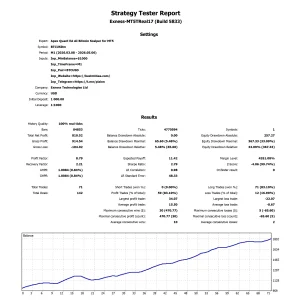
Apex Quant EA: AI Bitcoin Scalper for MT5
In stock
$0.00 $999.99Price range: $0.00 through $999.99

AVA AIGPT5 EA: AI Gold Scalper for MT4
In stock
$0.00 $679.99Price range: $0.00 through $679.99
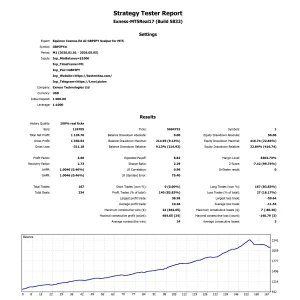
Equinox Cosmos EA: AI GBPJPY Scalper for MT5
In stock
$0.00 $599.99Price range: $0.00 through $599.99


Golden Deer Holy Grail Indicator (Lifetime Premium)
324 in stock
Original price was: $1,861.99.$187.99Current price is: $187.99.
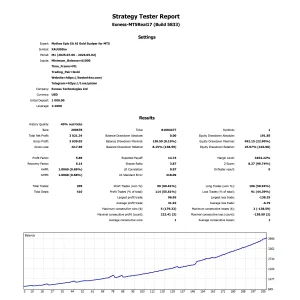
Mythos Epic EA: AI Gold Scalper for MT5
In stock
$0.00 $849.99Price range: $0.00 through $849.99
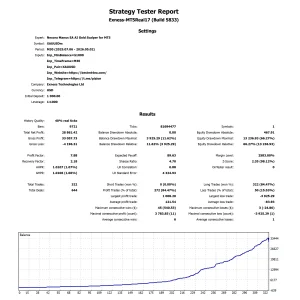
Nexora Manus EA: AI Gold Scalper for MT5
In stock
$0.00 $499.99Price range: $0.00 through $499.99
Powerful Forex VPS for MT4 & MT5 – Best Price
182 in stock
$44.99 $359.99Price range: $44.99 through $359.99

Top 2000 Trading Tools for Forex Success (EA & Indicator)
In stock
Original price was: $9,999.99.$0.00Current price is: $0.00.
Zenith Matrix EA: AI Gold Scalper for MT5
In stock
$0.00 $899.99Price range: $0.00 through $899.99