
Best vwma settings with volume profile



When using a VWMA (Volume Weighted Moving Average) alongside Volume Profile in trading, it’s important to consider settings that align with your trading style and the market conditions. VWMA is a type of moving average that places more emphasis on price points with higher trading volume, while Volume Profile provides a visual representation of the price levels at which most trading occurred during a specific period.

Key Settings for VWMA with Volume Profile:
Here are some guidelines for setting up your VWMA and Volume Profile in combination for better market analysis:

1. VWMA Settings
- Period Setting: The period for the VWMA largely depends on your trading timeframe. Here are some common period ranges:
- Short-Term Trading (Scalping / Day Trading): 10-20 periods.
- Swing Trading: 30-50 periods.
- Long-Term Trading: 100-200 periods.
- Volume Settings: Ensure that the volume being used is accurate to the timeframe you’re analyzing. If you’re trading on a 5-minute chart, make sure the VWMA uses the volume data for the respective time intervals.
- VWMA Type: Most charting platforms provide options to choose from different VWMA types, like a simple VWMA or a more advanced version. The default VWMA is typically a simple moving average weighted by volume.
2. Volume Profile Settings
Volume Profile shows where most of the volume took place at different price levels during a specific time period. It helps to identify key levels of support and resistance.

- Time Period Selection: The default time period for Volume Profile can range from daily to weekly to monthly settings. Commonly used timeframes are:
- Intraday (for day traders): Volume Profile may cover 1-2 days of data.
- Swing Traders (short-term): Use a few days to weeks of data (2-7 days).
- Long-Term Traders: Weekly or monthly volume profile can be effective.
- Value Area Settings: Volume Profile highlights the “Value Area,” which is typically set to 70% of the total volume traded. Adjusting the value area percentage to fit your style (for example, narrowing it to 50% for a tighter focus) can help identify more precise support and resistance zones.
- Point of Control (POC): The POC represents the price level where the highest volume was traded. This is often a crucial level for determining support or resistance. Traders typically look for price action around the POC for potential trade opportunities.
- Range Length: You can choose the number of bars or candles that the Volume Profile should cover. A wider range might give you broader insights but could potentially miss smaller, intraday price action. A narrower range is ideal for very short-term analysis but might miss key longer-term levels.
Best Combination of VWMA and Volume Profile:
- VWMA can help you identify the trend based on volume-weighted price action, while Volume Profile can reveal key levels of price interest.
- Bullish Confirmation: If the price is above the VWMA and a significant volume profile level (like the POC or Value Area High) is acting as support, this could indicate a bullish trend.
- Bearish Confirmation: If the price is below the VWMA and the POC or Value Area Low is acting as resistance, this can indicate a bearish market sentiment.
Example of Combining VWMA and Volume Profile:
- Short-Term Trade: For a short-term intraday trade (say on a 15-minute chart), you could set the VWMA to 10 periods and adjust the volume profile to show a few hours’ worth of data.
- Swing Trade: If you’re looking to trade over a couple of days, a 30-period VWMA and a Volume Profile set for a few days might provide a clearer picture of where key support and resistance zones are likely to occur.
- Long-Term Analysis: A 100-period VWMA combined with a weekly or monthly volume profile can give you insights into the broader market direction and where institutional volume is focused.
Tips for Using Both Together:
- Confluence Areas: Look for areas where the VWMA and Volume Profile levels intersect or align, as this can provide stronger signals.
- Price Reactions: Watch how price reacts around the POC and value area zones. If there’s significant volume at these levels, the price is likely to respect them, making them key areas for trades.
In conclusion, the best VWMA settings with Volume Profile depend on your trading style and timeframe. Experiment with different combinations, keeping in mind the importance of volume, the periods you select, and how they align with the price action you’re observing.
Most Popular Forex EA
Onix Stratos XAUUSD EA: AI Smart Scalper for MT5
In stock
$0.00 $999.99Price range: $0.00 through $999.99
Elysium Vortex EURCAD EA: AI EURCAD Scalper for MT5
In stock
$0.00 $199.99Price range: $0.00 through $199.99
Equinox Cosmos GBPJPY EA: AI GBPJPY Scalper for MT5
In stock
$0.00 $399.99Price range: $0.00 through $399.99
Apex Quant BTCUSD EA: AI Bitcoin Scalper for MT5
In stock
$0.00 $159.99Price range: $0.00 through $159.99
Zenith Matrix XAUUSD EA: AI Gold Scalper for MT5
In stock
$0.00 $899.99Price range: $0.00 through $899.99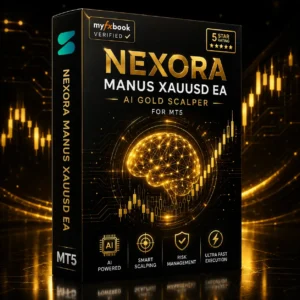
Nexora Manus XAUUSD EA: AI Gold Scalper for MT5
In stock
$0.00 $699.99Price range: $0.00 through $699.99
Mythos Epic XAUUSD EA: AI Gold Scalper for MT5
In stock
$0.00 $849.99Price range: $0.00 through $849.99
Obsidian Aether EURUSD EA: AI Grid Scalper for MT5
In stock
$0.00 $797.99Price range: $0.00 through $797.99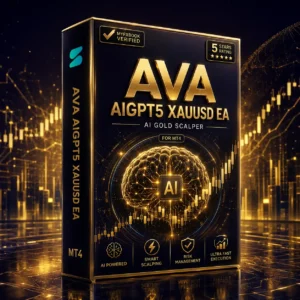
AVA AIGPT5 XAUUSD EA: AI Gold Scalper for MT4
In stock
$0.00 $679.99Price range: $0.00 through $679.99

Golden Deer Holy Grail Indicator (Lifetime Premium)
In stock
Original price was: $109.99.$87.99Current price is: $87.99.
Windows VPS for MT4 & MT5
In stock
$44.99 $359.99Price range: $44.99 through $359.99



 Gold Forex EA