
Grinder Trend Detection Using RSI and Relative Volume Filters



In the fast-paced world of trading, identifying subtle trends in grinder stocks can be one of the most challenging yet rewarding skills. Traders often struggle with low-volatility stocks that move slowly over time, generating small profits if correctly timed. This is where grinder trend detection using RSI and relative volume filters becomes invaluable. By combining momentum indicators with volume analysis, traders can pinpoint high-probability setups even in the most challenging market conditions.
Introduction to Trend Detection in Trading
Trend detection is at the heart of profitable trading. Successful traders know that riding trends—whether in bullish or bearish markets—provides the most consistent opportunities. Technical analysis offers multiple tools, but the key lies in combining them effectively to reduce false signals.
For grinder stocks, traditional trend indicators often fail because price movements are slow and gradual. This makes the integration of RSI (Relative Strength Index) and relative volume filters essential for spotting subtle but significant price action.
Understanding Grinder Stocks
Grinder stocks, often overlooked, are defined by their slow, steady price movement and lack of volatility. These stocks “grind” their way up or down without dramatic spikes, making them tricky to trade for beginners.
Why Grinder Stocks Are Difficult to Trade
- Low Volatility: Minimal price swings can generate false breakouts.
- False Signals: Standard momentum indicators might trigger premature buy or sell signals.
- Slow Gains: Profits accumulate gradually, requiring patience and discipline.
Typical Market Behavior of Grinder Stocks
Grinder stocks often remain in consolidation zones for extended periods before trending. They form small, incremental patterns that may go unnoticed without careful analysis. Recognizing these subtle trends requires precise tools like RSI and volume filters, which highlight momentum shifts and unusual activity.

Basics of Relative Strength Index (RSI)
The Relative Strength Index (RSI) is a momentum oscillator measuring the speed and change of price movements. It ranges from 0 to 100 and is widely used to identify overbought or oversold conditions.
Calculating RSI
RSI is calculated using the following formula:RSI=100−1+RS100
Where RS (Relative Strength) is the average of up closes divided by the average of down closes over a given period (usually 14 days).
For example, if a stock gains an average of 1.2 points on up days and loses 0.8 points on down days over 14 days:RS=0.81.2=1.5 RSI=100−1+1.5100=60
An RSI above 70 typically signals overbought conditions, while below 30 suggests oversold.
Interpreting RSI Signals
- Overbought/Oversold: Classic signals to anticipate reversals.
- Divergence: When price makes a new high but RSI does not, it signals potential trend weakening.
- Momentum Shifts: RSI crossing mid-level (50) can indicate a trend change.
Relative Volume Filters Explained
Relative volume (RVOL) measures the current trading volume compared to the average volume over a certain period. A spike in relative volume often precedes price movements, even in slow-moving stocks.
Calculating Relative Volume
RVOL=Average Volume over n periodsCurrent Volume

For example, if a stock typically trades 100,000 shares per day and suddenly trades 300,000 shares, its RVOL = 3, signaling increased interest.
Using Relative Volume to Confirm Trends
Relative volume is a crucial filter to confirm RSI signals. If RSI indicates an upward trend but volume remains below average, the signal might be weak. Conversely, combining high RSI with high relative volume significantly increases trend reliability.
Combining RSI with Relative Volume for Grinder Trend Detection
The combination of RSI and relative volume is particularly effective for grinder stocks. RSI identifies momentum shifts, while relative volume confirms whether these shifts are backed by meaningful market participation.
Step-by-Step Grinder Trend Detection Strategy
- Identify Potential Grinders: Look for low-volatility, steadily moving stocks.
- Apply RSI Filter: Identify stocks with RSI crossing above 50 for bullish momentum or below 50 for bearish momentum.
- Check Relative Volume: Ensure RVOL > 1.5 to confirm sufficient trading activity.
- Entry Criteria: Buy when RSI rises above 50 and RVOL spikes; sell when RSI falls below 50 with rising volume.
- Exit Strategy: Use trailing stops or predefined profit targets; avoid overtrading.
Example of RSI + Relative Volume in Action
Imagine a stock trading between $20-$21 for weeks. RSI crosses above 50, and relative volume spikes to 2.5. This alignment indicates a high-probability upward trend. Traders can enter with confidence, setting stop-loss just below consolidation lows.
Backtesting the Strategy
Backtesting is essential to validate the effectiveness of this approach. Traders can use historical data to evaluate entry/exit points and overall performance.
Key Metrics to Evaluate Performance
- Win Rate: Percentage of successful trades.
- Risk-Reward Ratio: Average profit versus loss.
- Drawdown: Maximum capital loss during backtesting.
Common Pitfalls and Mistakes
- Ignoring Volume Confirmation: High RSI alone is unreliable.
- Overtrading: Chasing small moves can erode profits.
- Misinterpreting Divergence: Not all RSI divergence leads to reversal; confirm with volume.
Advanced Tips for Enhancing Accuracy
- Use multiple timeframes to filter false signals.
- Combine with support/resistance levels for better entry points.
- Monitor news catalysts affecting grinder stocks.
Tools and Platforms to Implement This Strategy
Popular trading platforms like TradingView, ThinkorSwim, and MetaTrader provide built-in RSI indicators and volume filters. They allow custom scripts to automate grinder trend detection, saving time and improving accuracy.
FAQs
1. What is the best RSI period for grinder stocks?
A 14-period RSI is standard, but traders may adjust to 7-10 for faster signals.

2. How much relative volume is considered significant?
Typically, RVOL > 1.5 indicates meaningful market participation.
3. Can this strategy work in all market conditions?
It performs best in stable or slowly trending markets; high volatility may generate false signals.
4. Should I use this strategy alone?
It’s recommended to combine with support/resistance, moving averages, or other filters.
5. How do I manage risk with grinder stocks?
Use tight stop-losses and position sizing to limit drawdowns.
6. Is this strategy suitable for day trading?
Yes, but it requires careful monitoring due to slow price movements.
Conclusion
Grinder trend detection using RSI and relative volume filters is a powerful method to trade low-volatility stocks effectively. By combining momentum with volume confirmation, traders can uncover high-probability setups that traditional indicators often miss. Patience, discipline, and careful risk management remain key to long-term success in trading grinders.
Most Popular Forex EA

Onix Stratos XAUUSD EA: AI Smart Scalper for MT5
In stock
$0.00 $999.99Price range: $0.00 through $999.99
Elysium Vortex EURCAD EA: AI EURCAD Scalper for MT5
In stock
$0.00 $199.99Price range: $0.00 through $199.99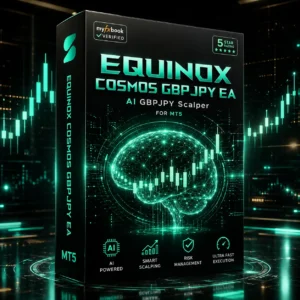
Equinox Cosmos GBPJPY EA: AI GBPJPY Scalper for MT5
In stock
$0.00 $399.99Price range: $0.00 through $399.99
Apex Quant BTCUSD EA: AI Bitcoin Scalper for MT5
In stock
$0.00 $159.99Price range: $0.00 through $159.99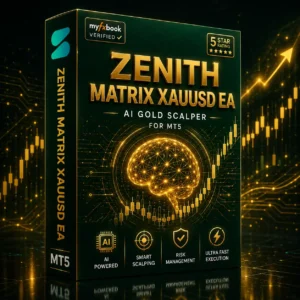
Zenith Matrix XAUUSD EA: AI Gold Scalper for MT5
In stock
$0.00 $899.99Price range: $0.00 through $899.99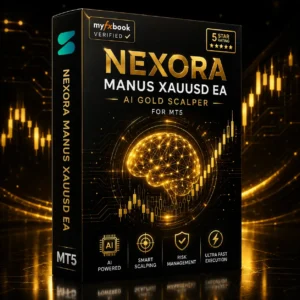
Nexora Manus XAUUSD EA: AI Gold Scalper for MT5
In stock
$0.00 $699.99Price range: $0.00 through $699.99
Mythos Epic XAUUSD EA: AI Gold Scalper for MT5
In stock
$0.00 $849.99Price range: $0.00 through $849.99
Obsidian Aether EURUSD EA: AI Grid Scalper for MT5
In stock
$0.00 $797.99Price range: $0.00 through $797.99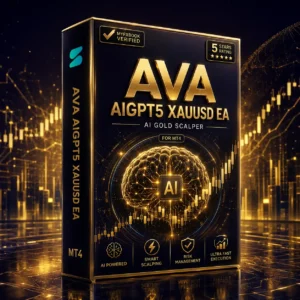
AVA AIGPT5 XAUUSD EA: AI Gold Scalper for MT4
In stock
$0.00 $679.99Price range: $0.00 through $679.99

Golden Deer Holy Grail Indicator (Lifetime Premium)
In stock
Original price was: $109.99.$87.99Current price is: $87.99.
Windows VPS for MT4 & MT5
In stock
$44.99 $359.99Price range: $44.99 through $359.99




 Gold Forex EA