
Read Candlestick Charts in Forex: Patterns & Strategies



Introduction to how to read candlestick charts in forex
Learning how to read candlestick charts in forex is one of the most important skills for any new trader. Candlesticks help you understand price movement at a glance, showing buyers’ and sellers’ strength in a simple, visual way. Because the forex market moves quickly, traders rely on candlesticks to make informed decisions, identify trends, and predict potential reversals. Understanding these patterns gives traders the confidence to enter or exit trades with greater accuracy.
Candlestick charts have become the universal charting method in forex, used by beginners and professionals alike. Once you understand how each candlestick forms and what it represents, you’ll be able to interpret market sentiment clearly—even in fast-moving conditions.
What Are Candlestick Charts in Forex Trading?
Candlestick charts visually display price movements using candles that show the open, high, low, and close. Unlike line charts, candlesticks give deeper insight into market psychology.
History and Evolution of Candlestick Charts
Candlestick charting originated in the 1700s in Japan, developed by rice traders to predict future supply and demand. Over time, this method spread worldwide and is now considered one of the most accurate tools for analyzing price actions.
Why Candlesticks Are Preferred in Forex
- They provide more information than simple line charts
- They are easy to read for beginners
- They show market sentiment instantly
- They work well on all timeframes
- Traders can identify patterns that suggest future movement
Candlestick charts offer unmatched insight, making them ideal for the fast-paced forex environment.
Key Components of a Candlestick
To understand how to read candlestick charts in forex, you must know the parts of a candle.
The Body
The candle’s body shows the difference between opening and closing prices.

Bullish vs. Bearish Bodies
- Bullish candles show price rising from open to close
- Bearish candles show price falling
The Wicks (Shadows)
Wicks represent price extremes.
Upper Wick
Shows the highest point price reached.
Lower Wick
Represents the lowest point price reached.
The Opening and Closing Prices
These define the body and signal market strength. A longer body often suggests stronger momentum.
How to Read Candlestick Charts in Forex Step-by-Step
Step 1: Identify Market Direction
Check whether the market is trending up, down, or sideways. Candlesticks are more accurate when used with trend direction.
Step 2: Evaluate Candle Size and Range
Large candles often signal strong pressure from buyers or sellers. Small candles suggest uncertainty.
Step 3: Watch for Reversals or Continuations
Patterns such as hammers or engulfing candles can indicate turning points.
Step 4: Confirm With Multiple Candles
Never rely on one candle alone—always look at the overall price structure.
Major Types of Candlesticks
Doji Candles
Indicate indecision. The market may change direction soon.
Hammer and Hanging Man
Hammers show bullish reversals; hanging man candles reveal potential bearish reversals.
Engulfing Patterns
A strong reversal pattern where a large candle completely covers the previous one.
Spinning Tops
Suggest indecision and low momentum.

Marubozu
A candle with no wicks—shows pure buying or selling pressure.
Candlestick Patterns Every Forex Trader Should Know
Reversal Patterns
Morning Star
A bullish reversal consisting of three candles.
Evening Star
A bearish version of the morning star.
Tweezer Tops and Bottoms
Indicate strong reversals.
Continuation Patterns
Rising Three
Shows upward trend continuation.
Falling Three
Confirms downward pressure.
Using Candlesticks with Support and Resistance
Breakouts
Candles closing above resistance often signal upward momentum.
Fakeouts (False Breakouts)
Wicks that pierce levels but fail may indicate manipulation or lack of volume.
Timeframes That Affect Candlestick Reading
Scalping (1m–5m)
Provides fast signals but can be noisy.
Day Trading (15m–1h)
Balanced and widely used timeframe.
Swing Trading (4h–Daily)
Best for long-term trend assessment.
Common Mistakes Beginners Make
Relying on One Candle
Patterns require context.

Ignoring Market Structure
Trends and support/resistance matter more than single candles.
Overtrading Based on Patterns Alone
Always confirm signals with other tools.
Practical Examples of Candlestick Reading in Forex
Example 1: Bullish Reversal
A hammer forming at support often signals a reversal.
Example 2: Bearish Continuation
Strong bearish engulfing at resistance may signal ongoing downtrend.
Tools and Platforms for Reading Candlestick Charts
MetaTrader 4/5
Popular for charting and technical analysis.
TradingView
Offers advanced charting and community ideas.
Visit: https://bestmt4ea.com/ https://www.tradingview.com/?aff_id=122391
Advanced Tips to Improve Forex Candle Analysis
Combining Indicators
Use RSI, moving averages, or MACD for confirmation.
Using Volume for Confirmation
High volume with a strong candle adds reliability.
Understanding Volatility and Price Action
Price action trading pairs beautifully with candlestick analysis.
FAQs About How to Read Candlestick Charts in Forex
- What is the easiest candlestick pattern for beginners?
The hammer is one of the easiest patterns to begin with. - How many candles should I analyze?
Look at 5–10 candles for proper context. - Are candlestick patterns accurate?
Yes, but only when used with trend and structure. - Can I rely on candlesticks alone?
It’s better to combine them with indicators. - Which timeframe is best?
Beginners should start with 15-minute or 1-hour charts. - Do candlesticks work in all markets?
Yes, including stocks, crypto, and commodities.
Conclusion
Learning how to read candlestick charts in forex gives traders a strong foundation for understanding market behavior. By recognizing patterns, studying candle structures, and combining techniques, traders can make informed decisions and trade with more confidence.
Most Popular Forex EA
Onix Stratos XAUUSD EA: AI Smart Scalper for MT5
In stock
$0.00 $999.99Price range: $0.00 through $999.99
Elysium Vortex EURCAD EA: AI EURCAD Scalper for MT5
In stock
$0.00 $199.99Price range: $0.00 through $199.99
Equinox Cosmos GBPJPY EA: AI GBPJPY Scalper for MT5
In stock
$0.00 $399.99Price range: $0.00 through $399.99
Apex Quant BTCUSD EA: AI Bitcoin Scalper for MT5
In stock
$0.00 $159.99Price range: $0.00 through $159.99
Zenith Matrix XAUUSD EA: AI Gold Scalper for MT5
In stock
$0.00 $899.99Price range: $0.00 through $899.99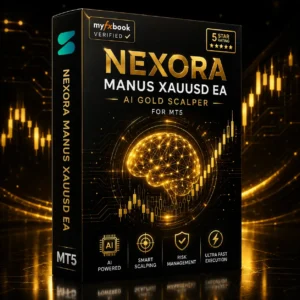
Nexora Manus XAUUSD EA: AI Gold Scalper for MT5
In stock
$0.00 $699.99Price range: $0.00 through $699.99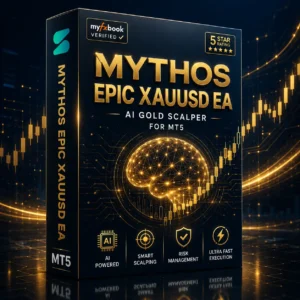
Mythos Epic XAUUSD EA: AI Gold Scalper for MT5
In stock
$0.00 $849.99Price range: $0.00 through $849.99
Obsidian Aether EURUSD EA: AI Grid Scalper for MT5
In stock
$0.00 $797.99Price range: $0.00 through $797.99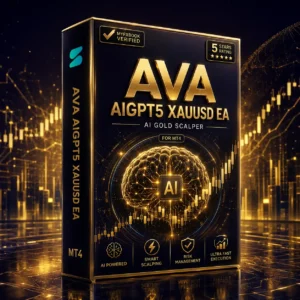
AVA AIGPT5 XAUUSD EA: AI Gold Scalper for MT4
In stock
$0.00 $679.99Price range: $0.00 through $679.99

Golden Deer Holy Grail Indicator (Lifetime Premium)
In stock
Original price was: $109.99.$87.99Current price is: $87.99.
Powerful Forex VPS for MT4 & MT5 – Best Price
In stock
$44.99 $359.99Price range: $44.99 through $359.99



 Gold Forex EA