
How to Set Stop Loss and Take Profit in Forex: Powerful Strategies for Smart Risk Management


Understanding the Basics of Stop Loss and Take Profit in Forex
Setting stop loss and take profit correctly is one of the most important skills every forex trader needs. When beginners learn how to set stop loss and take profit in forex, they instantly gain more control over their trades and emotions. These two tools help protect your money, lock in profit, and make your trading more consistent.
What Is a Stop Loss Order?
A stop loss (SL) is a protective order that automatically closes your trade if the market moves against you. It limits how much you can lose on a single position. Without it, you risk blowing your entire account with one wrong move.
What Is a Take Profit Order?
A take profit (TP) does the opposite. It closes your trade when the price hits your profit target. This allows you to secure gains without needing to watch the charts all day.
Why SL and TP Matter for Every Forex Trader
- They help you control risk.
- They remove emotional decision-making.
- They create clear expectations for every trade.
- They support long-term profitability and discipline.
A trader who understands how to set stop loss and take profit in forex has a huge advantage over those who “hope” for outcomes instead of planning them.
How to Set Stop Loss and Take Profit in Forex (Step-by-Step Guide)
Here’s a simple step-by-step method to set SL and TP like a skilled trader.
Step 1 – Identify Market Structure
Before entering any trade, read the price structure:
- Where is support?
- Where is resistance?
- Is the trend up, down, or sideways?
Your stop loss should go beyond market structure, not inside it.
Step 2 – Measure Reward-to-Risk Ratio
A strong trade should offer at least a 1:2 reward-to-risk ratio.
If your stop is 20 pips, your profit target should be at least 40 pips.
Step 3 – Choose Your Placement Method
Traders usually choose SL and TP based on:
- Support & resistance (structure-based)
- Volatility (ATR indicator)
- Swing highs/lows
- Trend lines
- Moving averages
Use the method that matches your strategy and market conditions.
Popular Strategies for Setting Stop Loss and Take Profit Levels
Structure-Based Stop Loss
This is the easiest and most reliable method.

- In a buy trade, the SL goes below support.
- In a sell trade, the SL goes above resistance.
ATR-Based Stop Loss and Take Profit
ATR measures volatility.
If ATR = 20 pips, you can set your SL at 1× ATR or 1.5× ATR depending on your style.
Moving Average Swing Method
Trend traders use moving averages (MA) to place SL under swing lows or above swing highs in a trending market.
Time-Based Exit Strategy
Scalpers often prefer taking profit within a certain time window instead of price reaching a specific target.
Common Mistakes When Setting SL and TP in Forex
Placing Stops Too Tight
A stop that’s too close gets hit by normal market noise.
Placing Stops Too Wide
A stop that’s too large increases losses and reduces reward-to-risk.
Not Adjusting to Volatility
Markets change daily. Your SL and TP must adapt.
Emotional Interference
Never move your stop loss farther away out of fear. Stick to your plan.
Advanced Techniques for Setting Stop Loss and Take Profit
Using ATR for Dynamic Stops
ATR helps you avoid placing stops too close in volatile markets.
Fibonacci Extensions and Retractions
Fib levels help identify profit zones where the market may reverse.
Market Liquidity Zones
Institutions often place orders at liquidity pools. Avoid setting your SL exactly at obvious highs or lows.
Tools and Indicators That Help You Set Better Stop Loss and Take Profit
TradingView Tools
Drawing tools, ATR indicators, and alerts help you plan levels precisely.
MT4/MT5 Built-In Tools
You can manually set SL and TP right from the order window.
Risk Management Calculators
Sites like MyFxBook Position Size Calculator help you calculate exact pip distance and lot size.
(External link: https://www.myfxbook.com/forex-calculators/position-size)
Real Forex Examples: How to Set SL and TP in Different Market Conditions
Example in a Trending Market
In an uptrend:
- Enter after a pullback
- Set SL below the recent higher low
- Set TP at twice the risk distance
Example in a Range-Bound Market
If the price is bouncing between two levels:

Powerful Forex VPS for MT4 & MT5 – Best Price
In stock
$44.99 $359.99Price range: $44.99 through $359.99| Validity | Monthly, Quarterly, Semi Annually, Annually |
|---|
- SL goes below the range
- TP goes near the opposite boundary
Example Using ATR Volatility Stops
If ATR is 15 pips:
- Set SL at 1.5 × ATR (≈ 22 pips)
- Set TP at 2× the risk (44 pips)
FAQs About How to Set Stop Loss and Take Profit in Forex
1. What is the best method to set stop loss?
The best method is structure-based—placing SL beyond support or resistance.
2. Can I trade without stop loss in forex?
Technically yes, but it’s extremely risky and not recommended.
3. What reward-to-risk ratio should I use?
Most traders use 1:2 or better.
4. Does take profit matter as much as stop loss?
Yes, TP locks in profit and helps maintain strategy discipline.
5. Should I move my SL after entering a trade?
Only to lock in profit—never to increase risk.
6. How do beginners learn how to set stop loss and take profit in forex?
Start with simple structure-based placements and follow a fixed plan.
Conclusion
Learning how to set stop loss and take profit in forex is the foundation of long-term trading success. With a clear plan, smart risk management, and consistent discipline, you can protect your capital and grow your account steadily.
Most Popular Forex EA
Onix Stratos XAUUSD EA: AI Smart Scalper for MT5
In stock
$0.00 $999.99Price range: $0.00 through $999.99
Elysium Vortex EURCAD EA: AI EURCAD Scalper for MT5
In stock
$0.00 $199.99Price range: $0.00 through $199.99
Equinox Cosmos GBPJPY EA: AI GBPJPY Scalper for MT5
In stock
$0.00 $399.99Price range: $0.00 through $399.99
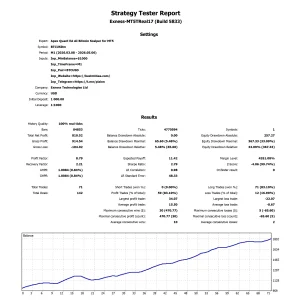
Apex Quant BTCUSD EA: AI Bitcoin Scalper for MT5
In stock
$0.00 $159.99Price range: $0.00 through $159.99
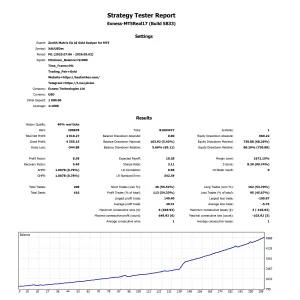
Zenith Matrix XAUUSD EA: AI Gold Scalper for MT5
In stock
$0.00 $899.99Price range: $0.00 through $899.99
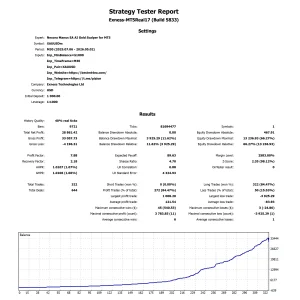
Nexora Manus XAUUSD EA: AI Gold Scalper for MT5
In stock
$0.00 $699.99Price range: $0.00 through $699.99
Mythos Epic XAUUSD EA: AI Gold Scalper for MT5
In stock
$0.00 $849.99Price range: $0.00 through $849.99

Obsidian Aether EURUSD EA: AI Grid Scalper for MT5
In stock
$0.00 $797.99Price range: $0.00 through $797.99

AVA AIGPT5 XAUUSD EA: AI Gold Scalper for MT4
In stock
$0.00 $679.99Price range: $0.00 through $679.99


Golden Deer Holy Grail Indicator (Lifetime Premium)
In stock
Original price was: $109.99.$87.99Current price is: $87.99.
Powerful Forex VPS for MT4 & MT5 – Best Price
In stock
$44.99 $359.99Price range: $44.99 through $359.99


 Gold Forex EA