
Stop Loss Forex Trading: 10 Strategies for Risk Management



Understanding Stop Loss in Forex Trading
Knowing how to use stop loss in forex trading is a skill that separates beginners from confident, long-term traders. A stop loss helps protect your capital and prevents emotional decisions that usually lead to larger losses. Since the forex market moves quickly, having a preset exit ensures you stay disciplined even when the market behaves unpredictably.
What Is a Stop Loss?
A stop loss is a preset instruction you give your broker to close a trade automatically when the price reaches a specific level. It’s built to limit the amount of loss you’re willing to tolerate. This means you’re deciding ahead of time exactly how much you’re willing to risk before entering the trade.
Why Stop Loss Orders Matter in Forex
Forex is one of the most volatile financial markets in the world. Without a stop loss, a simple price movement could wipe out a major part of your trading account. Using a stop loss protects you 24/7—even while you’re sleeping, busy, or away from the charts.
Types of Stop Loss Orders Every Trader Should Know
Fixed Stop Loss
A fixed stop loss remains unchanged throughout the trade. This is ideal for beginners because it helps build consistency.
Trailing Stop Loss
A trailing stop moves with the trade in your favor. This allows you to lock in profits while still leaving room for the market to continue moving in your direction.
Guaranteed Stop Loss (GSL)
A guaranteed stop loss protects you from slippage during high-volatility news events. It closes exactly at your pre-set level, even if the market gaps.
How to Use Stop Loss in Forex Trading Effectively
To master how to use stop loss in forex trading, you must learn to place stops logically—not randomly. Here are the most reliable techniques.
Identify Key Support and Resistance Levels
Support and resistance levels act like price barriers. Placing your stop just beyond these levels gives your trade breathing room while still protecting your position.
Position Size and Risk Management
Never risk more than 1–2% of your account on a single trade. Position size calculators help you determine exactly how many lots to trade so your stop loss stays within your risk limits.
Volatility-Based Stop Loss Placement
Indicators like the Average True Range (ATR) measure how much a pair typically moves. In volatile markets, stops must be slightly wider; in quieter markets, they can be tighter.
Time-Based Stop Loss Strategy
Sometimes the trade doesn’t move as expected within your planned timeframe. A time-based stop loss helps exit trades that stall or move sideways too long.
Common Mistakes Traders Make When Using Stop Losses
Setting Stops Too Tight or Too Wide
Stops that are too tight often lead to unnecessary losses, while stops too far can expose your account to larger risks. Balance is key.
Moving Stop Loss After Entering a Trade
This is one of the biggest emotional trading mistakes. Never widen your stop loss. Doing so turns a manageable loss into a painful one.

Ignoring Market News and Volatility
Economic announcements, especially NFP or CPI reports, can cause massive spikes. If you’re trading near news time, widen your stop or avoid entering the market altogether.
Advanced Stop Loss Strategies for Forex Pros
Using ATR for Dynamic Stops
ATR-based stops adapt to the current market conditions. This avoids placing stops too close during volatile sessions.
Hedging as a Stop Loss Alternative
Instead of closing a losing trade, some advanced traders hedge by opening an opposite position. While complex, it offers flexibility under certain conditions.
Partial Close with Trailing Stop
Closing a portion of your trade while trailing the rest helps secure profits while still giving the trade a chance to run further.
Tools and Indicators That Improve Stop Loss Placement
Fibonacci Retracement Levels
Stops placed beyond the 61.8% or 78.6% Fibonacci levels help provide structured risk levels.
Moving Averages
If you’re trading trends, placing a stop beneath moving averages like the 50-EMA or 200-EMA is a solid strategy.
Price Action Signals
Candlestick patterns such as pin bars, engulfing patterns, and inside bars can guide where your stop should be placed safely.
❓ FAQs About How to Use Stop Loss in Forex Trading
1. What’s the safest way to place a stop loss?
Position it beyond support/resistance and size your trade so your risk remains small.

2. Should beginners always use a stop loss?
Absolutely. A stop loss is the most important risk tool for new traders.
3. Can stop losses be guaranteed?
Yes—some brokers offer Guaranteed Stop Losses for a small fee.
4. Is a trailing stop better than a fixed stop?
It depends on your strategy. Trailing stops are great for trending markets; fixed stops are better for range trading.
5. How often should I adjust my stop loss?
Only adjust to lock in profits—never to increase risk.
6. Can I trade without a stop loss?
You can, but you shouldn’t. It exposes you to unlimited risk.
Conclusion
Learning how to use stop loss in forex trading is one of the most powerful steps toward becoming a confident and successful trader. A well-placed stop loss protects your capital, controls your emotions, and helps you stay disciplined. With the right tools and strategies, you can trade smarter while minimizing unnecessary risks.
Most Popular Forex EA
Onix Stratos XAUUSD EA: AI Smart Scalper for MT5
In stock
$0.00 $999.99Price range: $0.00 through $999.99
Elysium Vortex EURCAD EA: AI EURCAD Scalper for MT5
In stock
$0.00 $199.99Price range: $0.00 through $199.99
Equinox Cosmos GBPJPY EA: AI GBPJPY Scalper for MT5
In stock
$0.00 $399.99Price range: $0.00 through $399.99
Apex Quant BTCUSD EA: AI Bitcoin Scalper for MT5
In stock
$0.00 $159.99Price range: $0.00 through $159.99
Zenith Matrix XAUUSD EA: AI Gold Scalper for MT5
In stock
$0.00 $899.99Price range: $0.00 through $899.99
Nexora Manus XAUUSD EA: AI Gold Scalper for MT5
In stock
$0.00 $699.99Price range: $0.00 through $699.99
Mythos Epic XAUUSD EA: AI Gold Scalper for MT5
In stock
$0.00 $849.99Price range: $0.00 through $849.99
Obsidian Aether EURUSD EA: AI Grid Scalper for MT5
In stock
$0.00 $797.99Price range: $0.00 through $797.99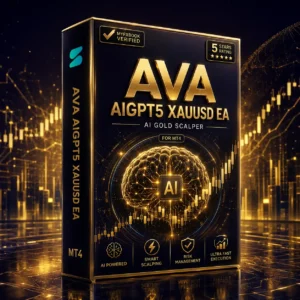
AVA AIGPT5 XAUUSD EA: AI Gold Scalper for MT4
In stock
$0.00 $679.99Price range: $0.00 through $679.99

Golden Deer Holy Grail Indicator (Lifetime Premium)
In stock
Original price was: $109.99.$87.99Current price is: $87.99.
Windows VPS for MT4 & MT5
In stock
$44.99 $359.99Price range: $44.99 through $359.99



 Gold Forex EA