

Order Flow Trading Basics for Retail Traders


Order flow trading is a strategy that focuses on analyzing the flow of buy and sell orders in the market. This technique allows traders to predict price movements based on the actual market orders, rather than relying on traditional indicators or price charts. Understanding order flow can provide a significant edge in identifying trends, reversals, and market sentiment.
Here’s a breakdown of the basics of order flow trading for retail traders:
1. What is Order Flow Trading?
Order flow trading is the practice of analyzing the actual buy and sell orders that are placed in the market. It goes beyond the typical price chart and volume analysis, focusing on the real-time dynamics of orders as they come in. The goal is to understand how large market participants (like institutional traders) are interacting with the market, which can provide insights into future price movements.
Order flow is typically observed using specialized tools and platforms that allow traders to view the market’s order book, which shows the current buy and sell orders at different price levels. These tools allow traders to see:
- Bid and Ask Prices: The current prices at which buyers and sellers are willing to transact.
- Order Book Depth: The number of buy and sell orders at various price levels.
- Trade Volume: The number of contracts or shares traded at specific prices.
2. Key Concepts in Order Flow Trading
a) Bid and Ask
- The bid is the highest price a buyer is willing to pay for an asset.
- The ask is the lowest price a seller is willing to accept.
Order flow traders pay close attention to the spread between the bid and ask, as well as how it changes over time. If the bid is rising faster than the ask, it might signal buying pressure, while a falling bid could indicate selling pressure.
b) Market Orders vs. Limit Orders
- Market Orders are executed immediately at the best available price. These orders reflect immediate demand and supply and can move the market.
- Limit Orders are placed at a specific price and are only executed if the market reaches that price. These orders are typically used by traders who don’t want to pay the current market price.
Order flow traders often focus on how market orders interact with the limit orders in the order book to understand where the price may move next.

c) Imbalance
An imbalance occurs when there is a significant difference between the buy and sell orders at a particular price level. This can indicate strong buying or selling pressure, which may lead to a price move. For example, if there are many more buyers than sellers at a given price level, it suggests upward pressure on the price.
d) Liquidity
Liquidity refers to how easily an asset can be bought or sold without impacting its price. High liquidity usually means that the market can absorb large orders without causing significant price movements. In low liquidity markets, a large order can cause a sharp price move.
3. Tools for Order Flow Trading
Retail traders can access order flow data using various tools. Some of the most common tools include:
- Level 2 Data: This shows the order book in real-time, listing the bid and ask prices along with the number of contracts or shares available at each level.
- Footprint Charts: These charts show volume data at each price level within a specified timeframe, helping traders to identify significant levels of buying and selling.
- DOM (Depth of Market): This tool provides a real-time view of the order book, showing the number of buy and sell orders at various price levels.
- Time and Sales: This shows real-time data of completed trades, allowing traders to see which price levels are seeing more action.
4. Order Flow Trading Strategies
Order flow traders use different strategies to identify trade opportunities based on the data they analyze. Some common strategies include:
a) Market Profile
Market Profile is a tool that categorizes market activity based on the time a price is at a particular level. Traders use it to identify key levels of support and resistance, as well as to gauge the balance of buying and selling interest in the market.
b) Volume Profile
Volume Profile displays the volume of trades at different price levels over a period. High volume areas indicate strong interest, while low volume areas might signal less market conviction.
c) Absorption
Absorption occurs when large orders are placed on the order book, but the market doesn’t immediately move. Traders watch for large limit orders that get absorbed by market participants, signaling a potential reversal or continuation of price movement.
d) Delta Divergence
Delta refers to the difference between buying and selling volume within a certain timeframe. Traders often monitor changes in delta to spot potential shifts in market sentiment. A positive delta suggests more buying activity, while a negative delta points to more selling.
5. Advantages of Order Flow Trading for Retail Traders
- Market Transparency: Retail traders can gain a better understanding of market behavior by analyzing real-time order flow data, which allows for more informed decisions.
- Higher Precision: Order flow trading enables traders to identify key levels of support, resistance, and trends with more precision than relying solely on price action.
- Spotting Big Players: By observing the behavior of large orders, retail traders can get an idea of what institutional investors are doing and position themselves accordingly.
6. Challenges of Order Flow Trading
- Complexity: Order flow trading can be difficult to master and may require significant practice to interpret data correctly.
- Fast-Paced Nature: The market can move quickly, and order flow data is very dynamic, meaning that timing is crucial. Retail traders might find it difficult to react fast enough to changing order flow.
- Tool Costs: Advanced tools for order flow analysis can be expensive, which may not be accessible for all retail traders.
7. Final Thoughts
Order flow trading offers an edge for retail traders who want to understand the inner workings of the market and how orders influence price movements. While the learning curve can be steep, with practice and the right tools, it can provide deeper insights into market sentiment and help traders make more informed decisions. The key to success in order flow trading lies in practice, patience, and being able to interpret data quickly and accurately.
If you’re considering diving into order flow trading, start by learning the fundamentals and using demo accounts or paper trading to practice before committing real capital.


Most Popular Forex EA

Apex Quant BTCUSD EA: AI Bitcoin Scalper for MT5
In stock
$0.00 $999.99Price range: $0.00 through $999.99

AVA AIGPT5 XAUUSD EA: AI Gold Scalper for MT4
In stock
$0.00 $679.99Price range: $0.00 through $679.99
Elysium Vortex EURCAD EA: AI EURCAD Scalper for MT5
In stock
$0.00 $599.99Price range: $0.00 through $599.99
Equinox Cosmos GBPJPY EA: AI GBPJPY Scalper for MT5
In stock
$0.00 $599.99Price range: $0.00 through $599.99


Golden Deer Holy Grail Indicator (Lifetime Premium)
324 in stock
Original price was: $1,861.99.$187.99Current price is: $187.99.
Mythos Epic XAUUSD EA: AI Gold Scalper for MT5
In stock
$0.00 $849.99Price range: $0.00 through $849.99
Nexora Manus XAUUSD EA: AI Gold Scalper for MT5
In stock
$0.00 $499.99Price range: $0.00 through $499.99
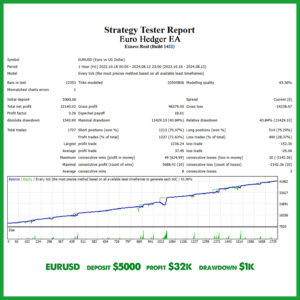
Obsidian Aether EURUSD EA: AI Grid Scalper for MT5
249 in stock
$0.00 $197.99Price range: $0.00 through $197.99
Powerful Forex VPS for MT4 & MT5 – Best Price
182 in stock
$44.99 $359.99Price range: $44.99 through $359.99

Top 2000 Trading Tools for Forex Success (EA & Indicator)
In stock
Original price was: $9,999.99.$0.00Current price is: $0.00.
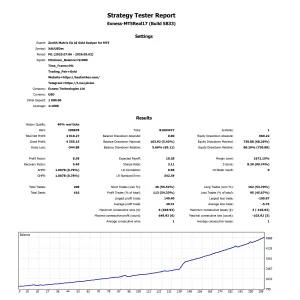
Zenith Matrix XAUUSD EA: AI Gold Scalper for MT5
In stock
$0.00 $899.99Price range: $0.00 through $899.99