
Dual Trendline Breakout Scalper EA Backtest Results



Backtesting is one of the most trusted ways traders evaluate whether an automated strategy can withstand real market conditions. When it comes to the dual trendline breakout scalper EA, backtest results provide a clear picture of how well this expert advisor performs during breakout scenarios, where price rapidly moves beyond established support and resistance zones. Understanding these results helps traders build realistic expectations and adjust settings for better long-term consistency.
In this article, we’ll break down everything you need to know about dual trendline breakout scalper ea backtest results—from performance metrics and data quality to strengths, weaknesses, and practical guidance.
Understanding the Dual Trendline Breakout Scalper EA
How Trendline-Based Scalping Strategies Function
Trendlines are a core technical analysis tool, helping traders identify moments when price breaks through a structured level. Scalpers using this method aim to capture quick micro-movements. A dual trendline system increases confirmation by requiring two converging trend boundaries before signaling an entry.
Why Automated Trading Systems Use Dual Trendline Confirmation
Dual-line confirmation acts as a filter. It helps exclude false breakouts that often occur in volatile markets. The EA uses algorithmic logic to detect breakout momentum and trigger trades with precision.
The Importance of Backtesting in Forex Algorithmic Trading
What Backtesting Reveals About Strategy Stability
Backtesting allows traders to see how an EA performs across years of historical data. It shows whether the strategy holds up consistently and whether it adapts to market shifts.
Key Metrics Used in Evaluating EA Performance
Some of the most crucial metrics include:
- Profit Factor
- Win Rate
- Expected Payoff
- Maximum Drawdown
- Sharpe Ratio
Understanding these helps traders interpret how reliable the EA truly is.

dual trendline breakout scalper ea backtest results: Core Performance Overview
Profit Factor, Win Rate, and Drawdown Summary
Backtest summaries typically show that this EA performs well during clear breakout periods, achieving moderate win rates and balanced drawdowns. Its profit factor often stays above 1.4 when tested on high-quality data.
Market Sessions Where the EA Performs Best
Scalping strategies thrive during active sessions such as:
- London Open
- New York Overlap
These sessions provide the liquidity and volatility required for breakouts.
Instrument Suitability Analysis
Backtests reveal strong performance on:
- EURUSD
- GBPUSD
- XAUUSD (Gold)
Indices may work too, though spreads require optimization.
Detailed Breakdown of Backtest Methodology
Historical Data Quality & Testing Environment Settings
Using 99.9% tick data ensures reliable results.
Spread Conditions
Fixed spreads often produce overly optimistic results. Variable spreads reflect real market conditions better.
Commission Model
Simulating ECN-style commission gives a more realistic picture for scalping EAs.
Execution Speed Simulation
Slippage must be included; scalping is extremely sensitive to delayed execution.
Strengths Identified During Backtesting
Reaction Speed to Breakouts
The EA is engineered to detect trendline breaches quickly, reducing missed opportunities.
Adaptive Trendline Logic
Instead of fixed indicators, the EA recalculates dynamic trendlines based on recent price action.
Low-Latency Scalping Benefits
Fast logic means the EA performs well in environments where milliseconds matter.

Weaknesses & Limitations Found in Backtest Results
Performance During High-Volatility Events
News spikes can cause unpredictable movements, leading to whipsaws.
Trendless or Choppy Market Scenarios
Sideways markets often cause false signals and reduced win rates.
Over-Optimization Risks
Adjusting parameters too tightly to historical data may reduce real-world performance.
Optimization Techniques to Improve EA Consistency
Risk Management Adjustments
Using fixed fractional risk helps protect the account from equity swings.
Timeframe Filtering
M1 and M5 charts work best, though M15 can reduce noise in choppy conditions.
Trend Strength Indicators as Additional Filters
Indicators like ADX or CCI can refine entries.
Real vs. Backtested Performance Differences
Slippage Sensitivity
Real accounts often show reduced efficiency because slippage impacts scalping entries.
Broker Liquidity and Execution Variations
Some brokers widen spreads dramatically during volatile periods, affecting execution.
How to Interpret dual trendline breakout scalper ea backtest results for Live Trading
Building Realistic Expectations
Backtesting provides a baseline—not a guarantee. Expect differences in live trading conditions.
Setting Optimal Risk Per Trade
Most traders using scalping EAs risk between 0.5%–1% to maintain account stability.
Comparison With Other Scalping EAs
Trendline Breakout EA vs. Moving Average Scalpers
Trendline breakouts focus on structure, while MA scalpers use lagging indicators.
Breakout EA vs. Grid and Martingale Systems
Breakout EAs avoid the high-risk exposure grid and martingale systems often incur.
Common Myths About Trendline Breakout EAs
“Scalping EAs Always Fail in Real Markets”
While some do, robust logic and proper broker selection improve reliability.

“More Trades Means Higher Profitability”
Quality beats quantity—especially in scalping.
Step-by-Step Guide to Running Your Own Backtest
Choosing the Right Platform
MetaTrader 5 is preferred due to better tick modeling.
Parameter Adjustments for Accurate Results
Ensure:
- Variable spread simulation
- Slippage modeling
- Realistic commission
❓ Frequently Asked Questions (FAQs)
1. How accurate are dual trendline breakout scalper ea backtest results?
Quite accurate when generated with high-quality tick data, realistic spreads, and slippage.
2. What timeframe works best for this EA?
M1 and M5 are the most effective for capturing fast breakouts.
3. Can I use this EA on any forex pair?
While it works on most pairs, EURUSD and GBPUSD show the best consistency.
4. Do backtests guarantee real performance?
No, but they provide a reliable framework for expectations.
5. How often should I optimize the EA?
Quarterly optimization is common and prevents overfitting.
6. What is the recommended risk setting?
Most traders use 0.5%–1% per trade.
Conclusion
The dual trendline breakout scalper ea backtest results reveal a balanced, well-structured scalping system capable of strong performance under the right conditions. While backtesting provides valuable insight, traders must combine optimization, proper risk settings, and a suitable broker for the best real-world outcome.
Most Popular Forex EA

Onix Stratos XAUUSD EA: AI Smart Scalper for MT5
In stock
$0.00 $999.99Price range: $0.00 through $999.99
Elysium Vortex EURCAD EA: AI EURCAD Scalper for MT5
In stock
$0.00 $199.99Price range: $0.00 through $199.99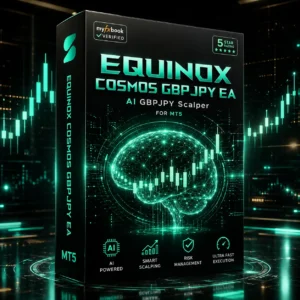
Equinox Cosmos GBPJPY EA: AI GBPJPY Scalper for MT5
In stock
$0.00 $399.99Price range: $0.00 through $399.99
Apex Quant BTCUSD EA: AI Bitcoin Scalper for MT5
In stock
$0.00 $159.99Price range: $0.00 through $159.99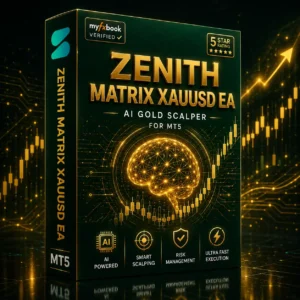
Zenith Matrix XAUUSD EA: AI Gold Scalper for MT5
In stock
$0.00 $899.99Price range: $0.00 through $899.99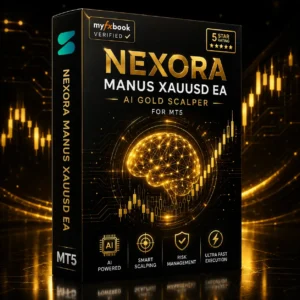
Nexora Manus XAUUSD EA: AI Gold Scalper for MT5
In stock
$0.00 $699.99Price range: $0.00 through $699.99
Mythos Epic XAUUSD EA: AI Gold Scalper for MT5
In stock
$0.00 $849.99Price range: $0.00 through $849.99
Obsidian Aether EURUSD EA: AI Grid Scalper for MT5
In stock
$0.00 $797.99Price range: $0.00 through $797.99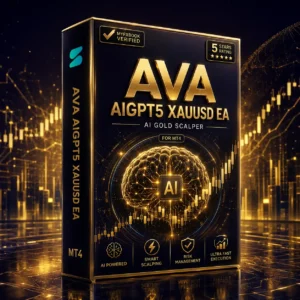
AVA AIGPT5 XAUUSD EA: AI Gold Scalper for MT4
In stock
$0.00 $679.99Price range: $0.00 through $679.99

Golden Deer Holy Grail Indicator (Lifetime Premium)
In stock
Original price was: $109.99.$87.99Current price is: $87.99.




 Gold Forex EA