

Top 12 Powerful & Advanced Risk Management Techniques for MT4 EAs



Introduction to Advanced Risk Management Techniques for MT4 EAs
When it comes to automated trading, nothing matters more than controlling risk. Even the smartest Expert Advisors can crash an account if they lack robust protection rules. That’s why traders often search for advanced risk management techniques for MT4 EAs—they want safer automation, steadier profits, and minimized emotional decision-making.
This article explores real-world, highly effective risk-control methods designed specifically for MT4 Expert Advisors (EAs). You’ll learn how pros keep their EAs running safely across all market conditions.
Understanding Risk in Algorithmic Trading
Types of Risk in Automated Forex Systems
Automated systems face several challenges, including:
- Market volatility risk: Sudden spikes can wipe out poorly protected trades.
- Execution risk: Delays and slippage can cause unwanted losses.
- Strategy failure risk: Market conditions change, making some EAs obsolete.
- Portfolio risk: Running too many correlated EAs multiplies exposure.
Why Risk Management Is Crucial for MT4 EA Performance
Even profitable strategies fail without proper risk rules. By integrating advanced controls, traders:
- Reduce drawdowns
- Improve long-term consistency
- Avoid catastrophic account wipeouts
- Adapt to volatile or trending markets automatically
Core Principles of MT4 EA Risk Management
Capital Allocation Strategies
Successful EA deployment starts with determining how much capital each system receives. Traders often split accounts by risk levels or EA type to avoid overexposure.
Defining Maximum Acceptable Drawdown
Setting a maximum drawdown threshold ensures an EA halts trading before damage becomes irreversible. This is one of the simplest but strongest protective tools.
Advanced Risk Management Techniques for MT4 EAs
Below are the most powerful techniques for modern EA users and developers.
Technique 1: Dynamic Position Sizing Models
Adaptive lot sizing is one of the smartest ways to control risk.
Volatility-Based Lot Sizing
Lot sizes adjust based on ATR or market volatility. High volatility means reduced risk by lowering lots automatically.
Equity-Based Scaling
Lot sizes grow only when your balance grows—this prevents early over-leveraging.
Technique 2: Multi-Layer Stop-Loss Systems
A single stop-loss isn’t enough during high volatility.
ATR-Calculated Stops
Stops based on ATR adapt to market conditions.

Time-Decay Protective Stops
If a trade lingers too long, the EA gradually tightens the stop to force an exit.
Technique 3: Trade Filtering with Market Regime Detection
Not all markets are equal. EAs excel when they know what conditions they’re in.
Trend vs. Range Filters
EAs avoid trades that contradict the current regime.
Volatility Regime Filters
Stops EAs from trading during unstable periods.
Technique 4: Portfolio-Level Risk Balancing
Managing multiple EAs requires balancing exposure.
Correlation-Aware EA Deployment
Avoid running two EAs that trade the same directional bias.
Asset Exposure Limits
Restrict total lots per symbol or currency group.
Technique 5: Equity Curve Protection Algorithms
This is one of the most underrated techniques.
Soft & Hard Equity Stops
Soft stops slow the EA down.
Hard stops completely deactivate it.
EA Self-Freeze Modes
The EA “pauses itself” when conditions are poor.
Technique 6: Martingale Replacement Methods
You don’t need dangerous doubling strategies.
Anti-Martingale Models
Increase lot size only during winning streaks.
Ladder Scaling With Risk Caps
Add positions gradually with predefined limits.
Technique 7: News-Event Risk Controls
High-impact news can destroy even the best EAs.
High-Impact Filter Integration
Your EA checks economic calendars and avoids risky times.
Auto-Close Before Events
Positions close automatically just before major news releases.
Practical Implementation Tips for MT4 EA Developers
- Hard-code minimum safety features
- Use multi-symbol backtesting
- Add redundant checks to avoid overtrading
- Stress-test your EA under rare market conditions
Real-World Examples of Improved EA Risk Outcomes
Brokers and algorithmic trading experts often note that traders who use dynamic stops and equity protection tend to experience significantly lower drawdowns. You can find additional research here:
External Resource: https://www.investopedia.com
Common Mistakes Traders Make in EA Risk Settings
- Risking more than 2–3% per trade
- Using fixed stops in highly volatile markets
- Trusting martingale logic without caps
- Running too many correlated EAs
Tools & Indicators That Enhance EA Risk Management
- ATR indicator
- Volatility meters
- Economic calendar APIs
- Trend-strength indicators
Frequently Asked Questions (FAQ)
1. Do beginners need advanced risk management techniques for MT4 EAs?
Yes—risk management helps beginners avoid major losses early.
2. What’s the safest risk percentage per trade?
Most experts recommend 1–2%.
3. Can risk systems be added to any EA?
Yes, nearly all EAs can be upgraded with protective features.
4. Is dynamic lot sizing better than fixed lots?
Absolutely—dynamic sizing adapts to market volatility.
5. How do news filters help?
They prevent trades during unpredictable market spikes.
6. Are portfolio-level risk tools necessary?
Yes, especially when running multiple EAs simultaneously.
Conclusion
Mastering advanced risk management techniques for MT4 EAs is essential for safer, smarter, and more consistent automated trading. By combining adaptive stops, volatility controls, position sizing, and equity protection rules, traders can build resilient systems that perform well across changing markets.
If you want your EA to survive long term, risk management isn’t optional—it’s the foundation of professional algorithmic trading.


Most Popular Forex EA

Apex Quant BTCUSD EA: AI Bitcoin Scalper for MT5
In stock
$0.00 $159.99Price range: $0.00 through $159.99

AVA AIGPT5 XAUUSD EA: AI Gold Scalper for MT4
In stock
$0.00 $679.99Price range: $0.00 through $679.99
Elysium Vortex EURCAD EA: AI EURCAD Scalper for MT5
In stock
$0.00 $199.99Price range: $0.00 through $199.99
Equinox Cosmos GBPJPY EA: AI GBPJPY Scalper for MT5
In stock
$0.00 $199.99Price range: $0.00 through $199.99


Golden Deer Holy Grail Indicator (Lifetime Premium)
324 in stock
Original price was: $1,861.99.$187.99Current price is: $187.99.
Mythos Epic XAUUSD EA: AI Gold Scalper for MT5
In stock
$0.00 $849.99Price range: $0.00 through $849.99
Nexora Manus XAUUSD EA: AI Gold Scalper for MT5
In stock
$0.00 $699.99Price range: $0.00 through $699.99
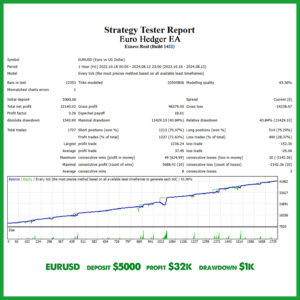
Obsidian Aether EURUSD EA: AI Grid Scalper for MT5
49 in stock
$0.00 $797.99Price range: $0.00 through $797.99
Powerful Forex VPS for MT4 & MT5 – Best Price
182 in stock
$44.99 $359.99Price range: $44.99 through $359.99

Top 2000 Trading Tools for Forex Success (EA & Indicator)
In stock
Original price was: $9,999.99.$0.00Current price is: $0.00.
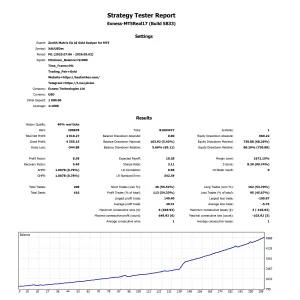
Zenith Matrix XAUUSD EA: AI Gold Scalper for MT5
In stock
$0.00 $899.99Price range: $0.00 through $899.99