
Ichimoku Cloud vs Volume Profile: Which Indicator Wins



When it comes to technical analysis, traders rely on a variety of tools to make informed decisions. Two popular tools that are often debated are Ichimoku Cloud and Volume Profile. Each offers distinct features and insights, and both have their advantages. So, which one is better? It really depends on your trading style, objectives, and market conditions. Let’s break down both and compare them to help you understand which might suit your needs better.
What is Ichimoku Cloud?
The Ichimoku Cloud is a comprehensive indicator that provides information about support, resistance, trend direction, and momentum all in one glance. It was developed by Japanese journalist Goichi Hosoda in the 1960s. The cloud (known as Kumo) is the most prominent feature, and it is formed by two lines — Senkou Span A and Senkou Span B — which together create a shaded region. The Ichimoku Cloud also includes Tenkan-Sen (Turning Line), Kijun-Sen (Base Line), and Chikou Span (Lagging Line).

Key Features of Ichimoku Cloud:
- Trend Direction: The cloud helps identify whether the market is in an uptrend, downtrend, or sideways.
- Support and Resistance: The edges of the cloud (Senkou Span A and B) act as dynamic levels of support and resistance.
- Momentum: The distance between the price and the cloud indicates the strength of the trend.
- Comprehensive: Provides multiple signals, making it a self-contained strategy.
When to use Ichimoku Cloud:
- In trending markets, where the indicator can show clear buy or sell signals.
- To gauge the overall market sentiment and trend direction.
What is Volume Profile?
Volume Profile is a tool that displays trading volume at different price levels over a specified period. Unlike traditional volume indicators that show total volume traded in a specific time frame (e.g., per day or per hour), Volume Profile plots volume at each price level, giving traders a deeper understanding of where most trading activity has occurred.
Key Features of Volume Profile:
- Price Levels: Shows areas of high and low trading volume at specific price levels.
- Volume Nodes: Key areas where significant volume has occurred, known as Value Area, Point of Control (POC), and High/Low Volume Nodes.
- Market Sentiment: Volume Profile can reveal areas of support and resistance based on volume accumulation.
- Liquidity: Highlights zones where liquidity is high or low, which can influence price movement.
When to use Volume Profile:

- To identify key support and resistance levels based on volume rather than price.
- In sideways or consolidating markets, where traditional trend indicators like moving averages might be less useful.
Ichimoku vs Volume Profile: Key Comparisons
| Feature | Ichimoku Cloud | Volume Profile |
|---|---|---|
| Purpose | Trend identification, support/resistance, momentum | Price levels with the most significant trading volume |
| Best for | Trending markets, quick overall trend analysis | Sideways markets, pinpointing areas of high volume |
| Indicators Provided | Cloud (Kumo), Senkou Span A/B, Tenkan-Sen, Kijun-Sen, Chikou Span | Volume distribution, Point of Control (POC), Value Area |
| Ease of Use | More complex, requires understanding of multiple components | Simple to interpret once volume nodes are identified |
| Signals | Clear buy/sell signals based on trend and cloud position | Shows key price levels of interest (support/resistance) |
| Time Horizon | Can be used for different timeframes (short to long-term) | Primarily used for intraday and medium-term analysis |
Which is Better?
The choice between Ichimoku Cloud and Volume Profile really depends on the type of market conditions and trading strategies you prefer.
- Ichimoku Cloud is better suited for traders who want an all-in-one indicator that can provide clear trend analysis, momentum, and potential buy/sell signals. It’s particularly useful for trending markets and for traders who like to use multiple signals from a single indicator.
- Volume Profile, on the other hand, is invaluable for traders who focus on price levels and volume. It can be especially useful in range-bound or consolidating markets where price tends to respect certain areas of high volume. It’s particularly powerful for identifying key support/resistance zones that are based on actual trading activity, rather than just price action.
Conclusion:
If you’re a trend-following trader, Ichimoku Cloud might be a better choice, as it provides a quick overview of the market’s direction, momentum, and potential reversal points. For those who prefer a more detailed analysis of price action, especially in non-trending or sideways markets, Volume Profile could be the better tool to help you spot significant levels of market interest based on volume.

Some traders even combine both tools for a more comprehensive strategy. For example, using the Ichimoku Cloud to determine the market’s overall trend and Volume Profile to pinpoint entry and exit points based on volume patterns.
Ultimately, both are powerful tools, and the “better” one will depend on how you trade and what information you find most valuable.
Most Popular Forex EA
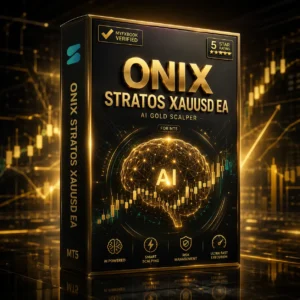
Onix Stratos XAUUSD EA: AI Smart Scalper for MT5
In stock
$0.00 $999.99Price range: $0.00 through $999.99
Elysium Vortex EURCAD EA: AI EURCAD Scalper for MT5
In stock
$0.00 $199.99Price range: $0.00 through $199.99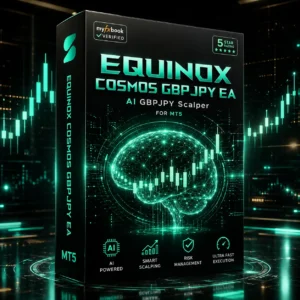
Equinox Cosmos GBPJPY EA: AI GBPJPY Scalper for MT5
In stock
$0.00 $399.99Price range: $0.00 through $399.99
Apex Quant BTCUSD EA: AI Bitcoin Scalper for MT5
In stock
$0.00 $159.99Price range: $0.00 through $159.99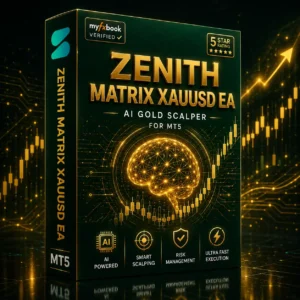
Zenith Matrix XAUUSD EA: AI Gold Scalper for MT5
In stock
$0.00 $899.99Price range: $0.00 through $899.99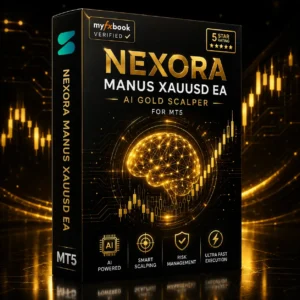
Nexora Manus XAUUSD EA: AI Gold Scalper for MT5
In stock
$0.00 $699.99Price range: $0.00 through $699.99
Mythos Epic XAUUSD EA: AI Gold Scalper for MT5
In stock
$0.00 $849.99Price range: $0.00 through $849.99
Obsidian Aether EURUSD EA: AI Grid Scalper for MT5
In stock
$0.00 $797.99Price range: $0.00 through $797.99
AVA AIGPT5 XAUUSD EA: AI Gold Scalper for MT4
In stock
$0.00 $679.99Price range: $0.00 through $679.99

Golden Deer Holy Grail Indicator (Lifetime Premium)
In stock
Original price was: $109.99.$87.99Current price is: $87.99.
Windows VPS for MT4 & MT5
In stock
$44.99 $359.99Price range: $44.99 through $359.99




 Gold Forex EA