
Sentiment AI Trading: Market Mood Analysis for MT4/MT5



H1: Understanding Sentiment AI for Market Mood: Powerful Insights for Smarter Decisions (2025 Guide)
The world of investing is evolving quickly, and one of the biggest breakthroughs in recent years is the rise of sentiment AI for market mood. This advanced technology allows traders, analysts, and institutions to measure how the market “feels” by analyzing emotions hidden in news headlines, social media conversations, financial reports, and trading behaviors. As markets grow more unpredictable, understanding sentiment gives investors an edge—helping them avoid emotional decisions, identify trends early, and manage risk more effectively.
H2: Introduction to Sentiment AI for Market Mood
Sentiment AI blends machine learning with natural language processing to analyze large amounts of text and determine the emotional tone behind it. When applied to financial markets, these emotional signals tell us whether investors feel optimistic, fearful, uncertain, or neutral. And since human emotion drives much of the market’s movement, sentiment analysis has become a key tool for navigating volatility.
H3: What Is Sentiment AI?
Sentiment AI is designed to interpret emotions from text-based data. It examines keywords, tone, context, and patterns to classify sentiment as positive, negative, or neutral. More advanced models can even detect subtle emotions such as excitement, confusion, or anxiety—critical indicators in market environments.
H3: Why Market Mood Matters in Modern Trading
Market mood is a reliable predictor of short-term price movement. When enthusiasm rises, markets often rally. When fear spreads, prices fall. Sentiment AI captures these emotional shifts early so traders can react with confidence and clarity.
H2: How Sentiment AI for Market Mood Works
Sentiment AI uses three core processes: data collection, language processing, and sentiment scoring.
H3: Data Collection Methods in Sentiment AI
Key sources include:
- Financial news websites
- Social media platforms like X and Reddit
- Company reports and earnings calls
- Analyst commentary
- Historical price movement
- Real-time trading data
H4: NLP and Machine Learning Techniques
Advanced models use transformers, neural networks, and context-aware algorithms to detect mood patterns across large datasets.
H4: Real-Time Sentiment Scoring Models
These models generate sentiment scores from -1 (strongly negative) to +1 (strongly positive), offering actionable signals to traders.
H2: Key Components of Sentiment AI Systems
H3: Emotion Classification Engines
These engines determine the emotional tone of content: excitement, fear, trust, anger, and joy—emotions that directly affect trading behavior.
H3: Trend Forecasting Layers
Once sentiment is measured, forecasting layers compare patterns with historical data to predict market direction.
H3: Market Behavior Mapping Tools
These tools visualize sentiment changes, showing when markets shift from optimism to anxiety.
H2: Benefits of Using Sentiment AI for Market Mood
H3: Improved Investment Decisions
Traders gain valuable insight into market psychology, helping them identify entry and exit points with greater accuracy.
H3: Reduced Emotional Trading Bias
Sentiment AI replaces gut feelings with data-backed insights, reducing impulsive decisions.
H3: Enhanced Risk Management
By predicting volatility early, sentiment AI helps minimize losses during market downturns.
H2: Real-World Applications of Sentiment AI
H3: Stock Market Predictions
Sentiment signals often foreshadow stock movement, helping traders anticipate price swings.
H3: Crypto Market Mood Tracking
Cryptocurrency markets are especially emotion-driven, making sentiment AI invaluable for crypto traders.
H3: Algorithmic Trading Systems
Many automated systems now integrate sentiment signals for improved accuracy and timing.
H2: Challenges and Limitations in Sentiment AI for Market Mood
H3: Data Quality Issues
Not all online content is reliable—noise and misinformation can distort sentiment.
H3: Algorithmic Bias
Models may misinterpret sarcasm, slang, or industry jargon.
H3: Model Overfitting & Reliability
If a model becomes too tailored to past data, it may underperform in new market conditions.
H2: Best Tools and Platforms for Sentiment AI for Market Mood
H3: Market Sentiment Dashboards
Platforms like MarketPsych, LunarCrush, and StockTwits offer sentiment indicators.
H3: AI-Based Trading Indicators
Advanced tools highlight bullish or bearish sentiment in real time.
H3: Predictive Analytics Software
Enterprise tools integrate sentiment into institutional trading workflows.
H2: Building Your Own Sentiment AI Model
H3: Data Pipeline Setup
Start by collecting clean, labeled datasets from news sources, APIs, and market feeds.
H4: Model Selection and Training
Use transformer-based architectures like BERT or GPT for accurate emotion detection.
H4: Evaluation and Deployment
Test the model’s accuracy, refine predictions, and deploy it into trading environments.
H2: Ethical and Regulatory Considerations
H3: Transparency in AI Predictions
Investors must understand how models arrive at their predictions.
H3: Handling Sensitive Data
AI systems should respect privacy laws and ethical data use.
H3: Avoiding Manipulation of Market Sentiment
Systems must avoid amplifying misinformation or manipulating emotions.

H2: Future Trends of Sentiment AI for Market Mood
H3: Multimodal Sentiment Tracking
Future AI will analyze voice tone, video content, and facial expressions to enhance prediction accuracy.
H3: Integration with Autonomous Trading Agents
Trading bots will make fully emotion-aware decisions in real time.
H2: FAQs About Sentiment AI for Market Mood
1. What is sentiment AI for market mood?
It is an AI system that analyzes emotional signals from news, social media, and financial data to gauge market psychology.
2. Does sentiment AI improve trading accuracy?
Yes. It enhances strategy accuracy by revealing emotional patterns that often drive short-term movements.
3. Can sentiment AI be used for crypto markets?
Absolutely—crypto markets rely heavily on social sentiment.
4. Is sentiment AI reliable?
It’s reliable when fed high-quality data and regularly updated models.
5. Do algorithmic traders use sentiment AI?
Yes—many advanced trading bots integrate sentiment signals.
6. Where can I learn more about sentiment analysis?
A great starting point is the resource from IBM: https://www.ibm.com/topics/sentiment-analysis
H2: Conclusion
Sentiment AI for market mood is becoming a powerful ally for investors, traders, and analysts. By interpreting emotional signals hidden in large datasets, it helps predict trends, avoid emotional mistakes, and refine trading strategies. As AI continues to evolve, the ability to understand market mood will become even more accurate and accessible—ushering in a new era of data-driven investing.
Most Popular Forex EA
Onix Stratos XAUUSD EA: AI Smart Scalper for MT5
In stock
$0.00 $999.99Price range: $0.00 through $999.99
Elysium Vortex EURCAD EA: AI EURCAD Scalper for MT5
In stock
$0.00 $199.99Price range: $0.00 through $199.99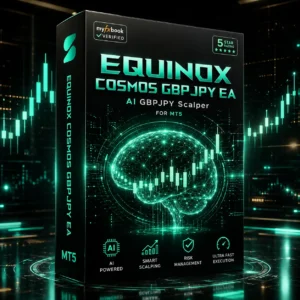
Equinox Cosmos GBPJPY EA: AI GBPJPY Scalper for MT5
In stock
$0.00 $399.99Price range: $0.00 through $399.99
Apex Quant BTCUSD EA: AI Bitcoin Scalper for MT5
In stock
$0.00 $159.99Price range: $0.00 through $159.99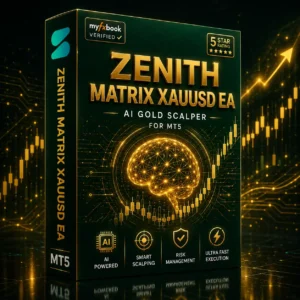
Zenith Matrix XAUUSD EA: AI Gold Scalper for MT5
In stock
$0.00 $899.99Price range: $0.00 through $899.99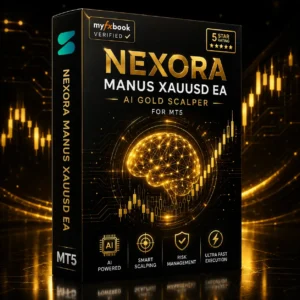
Nexora Manus XAUUSD EA: AI Gold Scalper for MT5
In stock
$0.00 $699.99Price range: $0.00 through $699.99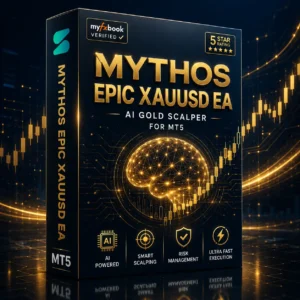
Mythos Epic XAUUSD EA: AI Gold Scalper for MT5
In stock
$0.00 $849.99Price range: $0.00 through $849.99
Obsidian Aether EURUSD EA: AI Grid Scalper for MT5
In stock
$0.00 $797.99Price range: $0.00 through $797.99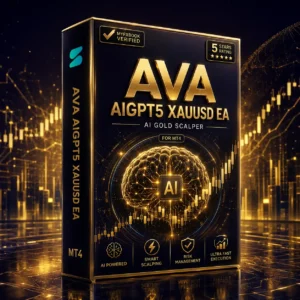
AVA AIGPT5 XAUUSD EA: AI Gold Scalper for MT4
In stock
$0.00 $679.99Price range: $0.00 through $679.99

Golden Deer Holy Grail Indicator (Lifetime Premium)
In stock
Original price was: $109.99.$87.99Current price is: $87.99.
Windows VPS for MT4 & MT5
In stock
$44.99 $359.99Price range: $44.99 through $359.99



 Gold Forex EA